

Teleology
What is it for?

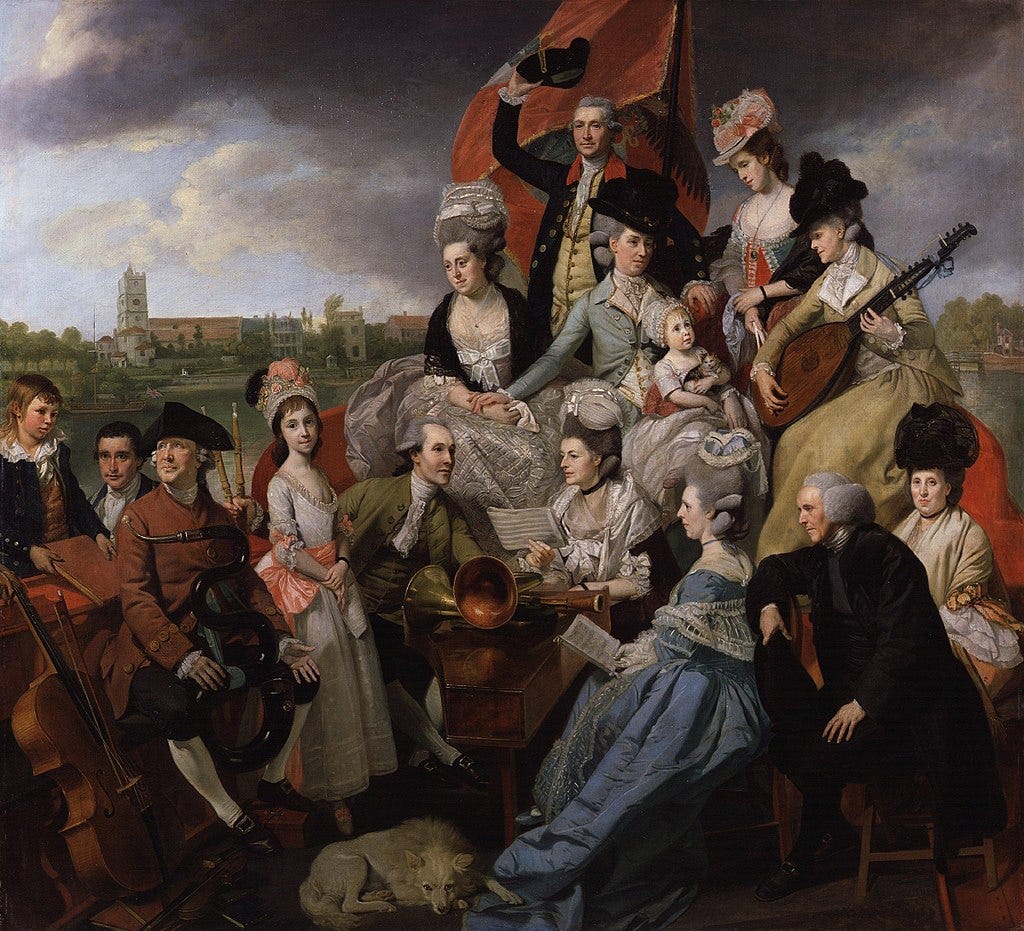
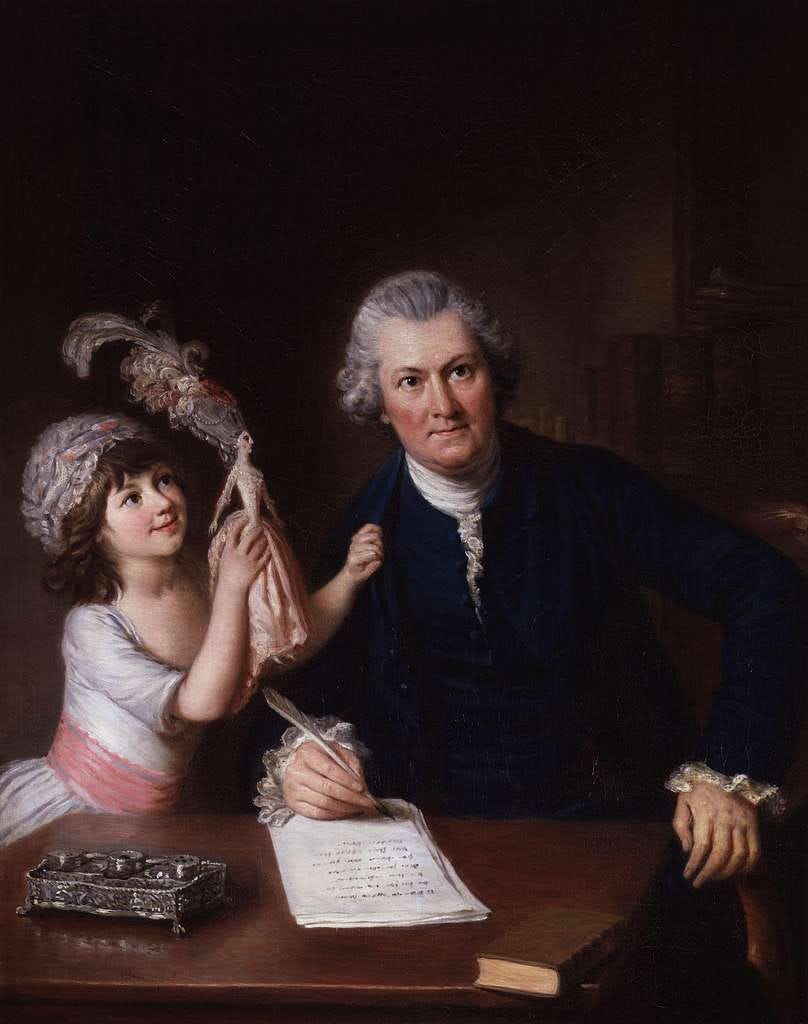
That is the Sharp Family. Evidently a musical bunch.
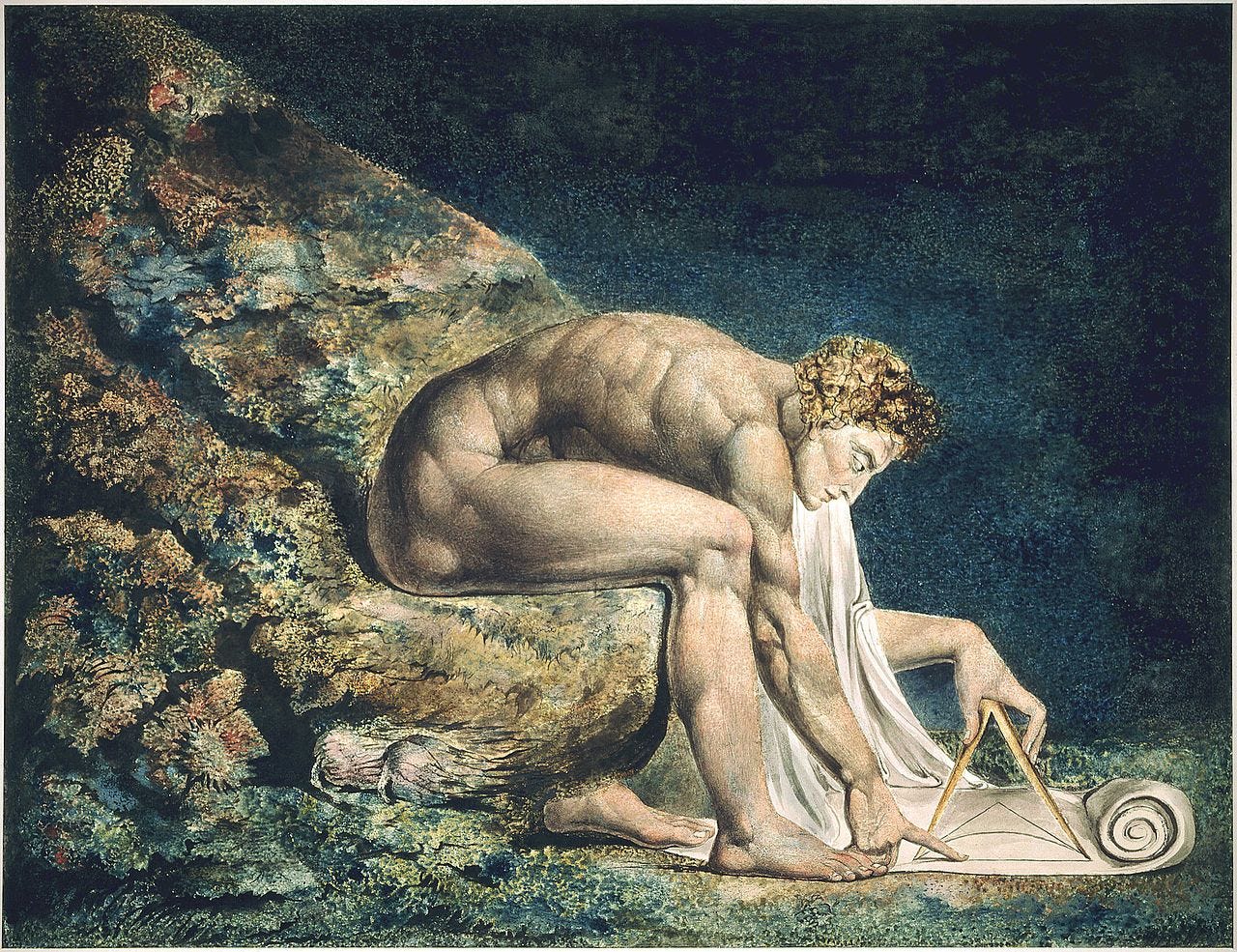
And a couple of uses of Blake’s image of Newton:
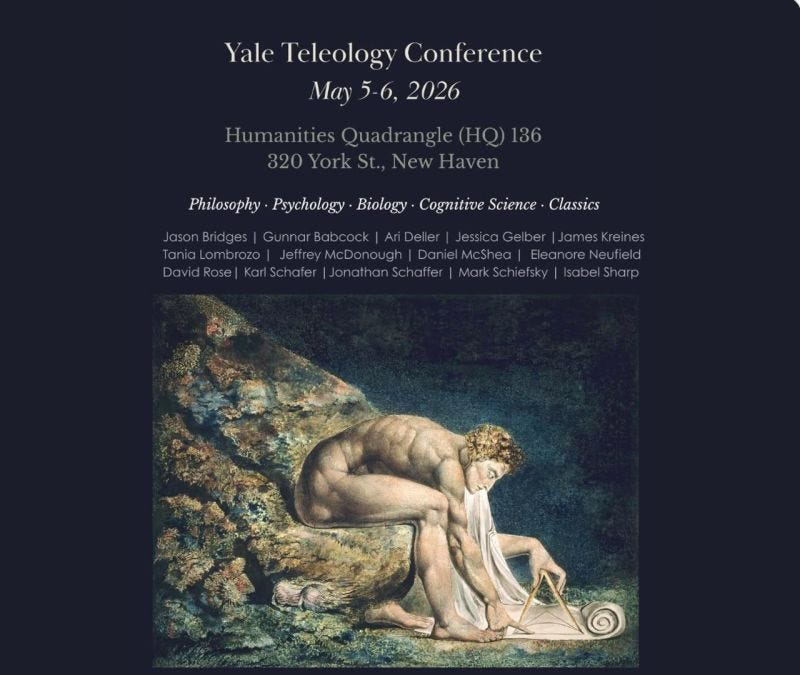
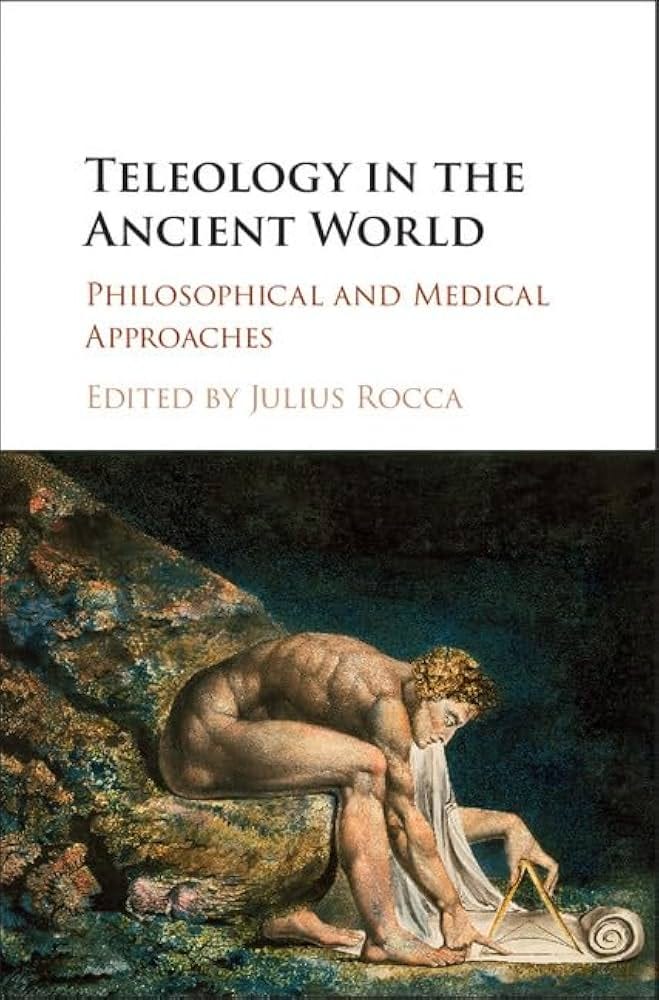
I’m not sure why the term teleology seems to suggest Blake’s Newton these days, but it seems to be an underlying view of what is involved in taking the (Newtonian?) measure of the cosmos from a less-than-healthy or reprehensibly self-involved (methodological?) point of view.
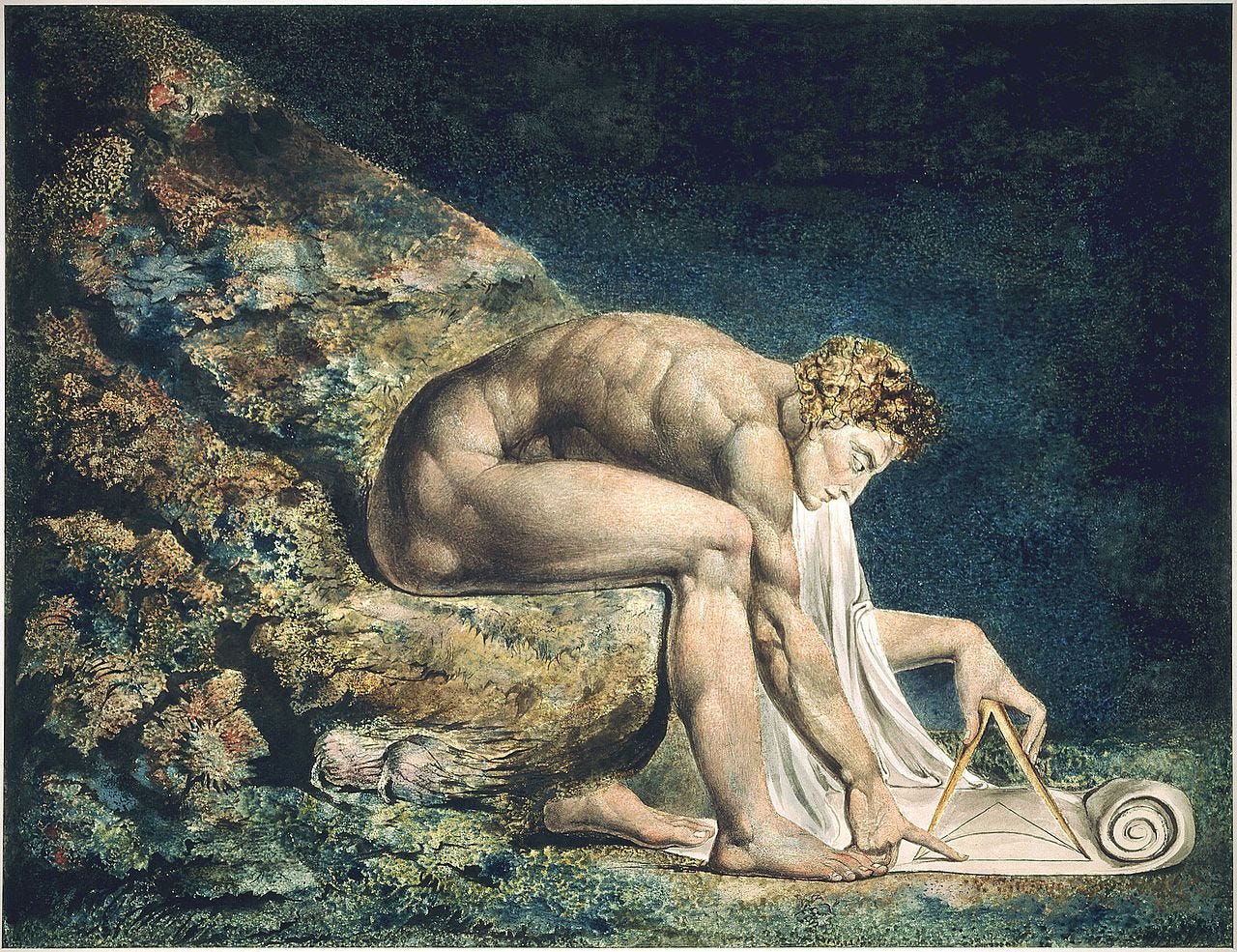
The paradoxical point of view of a non-visionary vision (as Blake apparently said of Newton with respect to “Optics”) seems to be somehow implicated in the very notion of teleology, as Wolff notes when he points out that something can apparently exhibit the beauty of having a complete and purposeful function but only in terms of appearance. This “looks like teleology” of course leads to misguided pleasures and the ethical problems that follow from misguided pleasures. Aesthetics alone can’t deal with ethical dilemmas; fortunately, from a methodological point of view, Aesthetics seems to be a genuinely unhealthy approach in the best possible sense of the term, but, if I get this articled bloggery to the late eighteenth century, I’ll look into such things as Blake’s view of Newton and why the Scots could not openly accept Wolf (the philologist not the philosopher) – er – that is Wolf’s point that Homer was not just one primitive genius, but the remains of a whole set of traditions stretching back deep into Asia Minor and off to the Tyrrhenian Sea. In their Greco-Roman hearts they believed it, but in their Scottish sense of the nearby Ossian wonders of primordial humanity, they could not admit it except to their inmost selves.
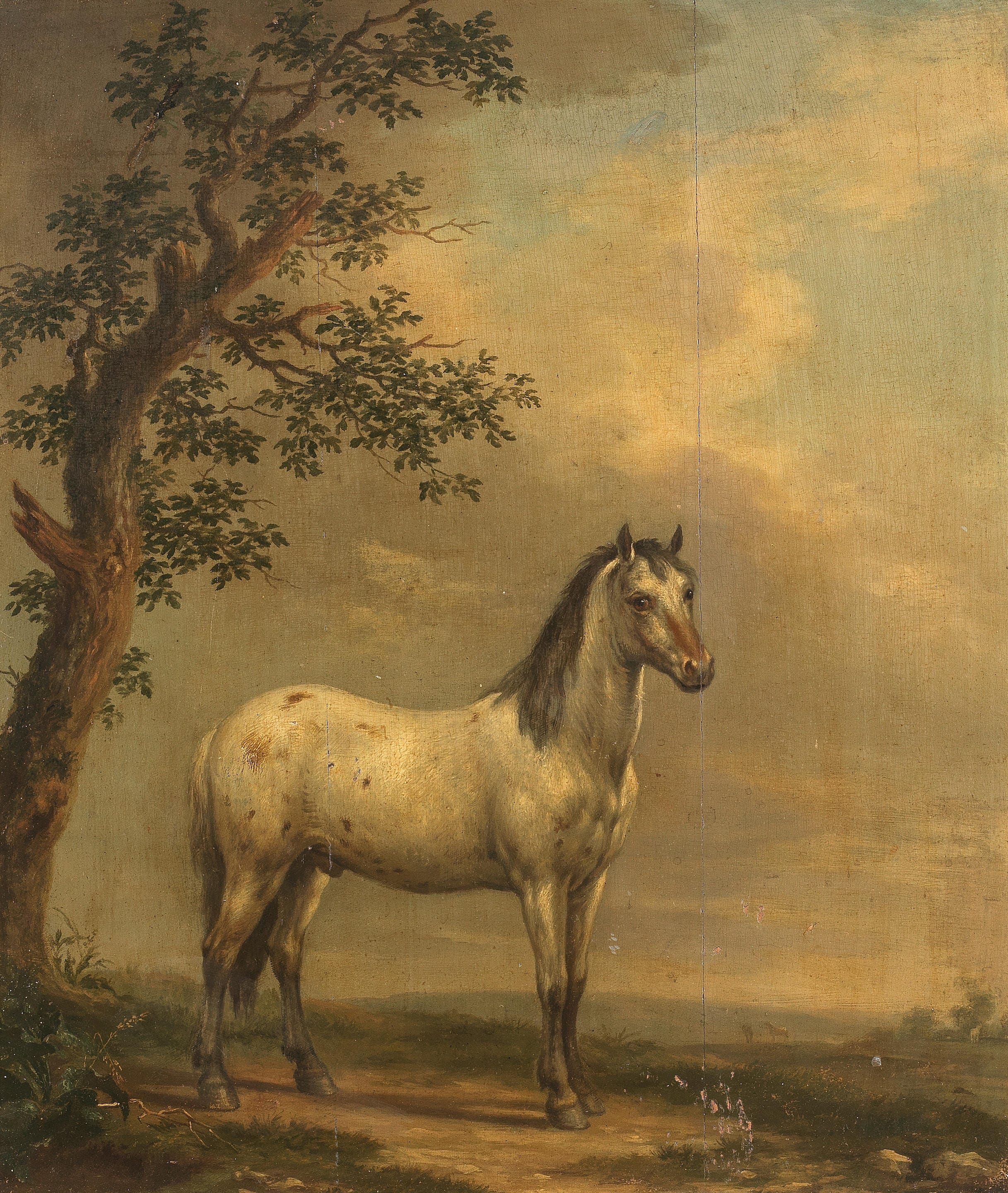
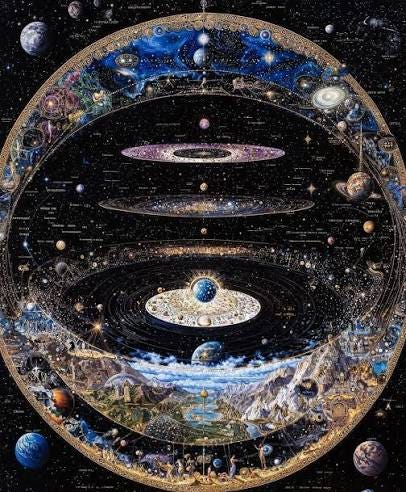
Anyway, more about that later. Meanwhile, I guess I’ve already gone over the problems that most of the Enlightened Eighteenth Century had with the Newtonian “clockwork universe.” I have noted how the idea of a rational universe as assumed during most of the Enlightenment was nothing like the Newtonian cosmos – which was viewed as the result of some tinkering with observations and not grounded in the deeper realities of pure rationality and sufficient reason that actually drove the universe.
Anyway, back to earlier things.
At about the same time (1723 or a little later 1728) that Wolff was exiled from Prussia under pain of death by hanging, he proposed teleology (or purposefulness) in the perception of beauty as a particular area that needed a more elaborate logic than the logic of causation as found in Leibnitz’s work and the final stages of Late Scholasticism. (See Nabeel Hamid’s paper down in sources on this for more detail). As Buchenau shows (see sources below). Kant’s characterization of the contradictions in judging beauty on the basis of a perfect fulfillment of a purpose is a little unfair to how Wolff addressed the problems of beauty and teleology.
After all, Wolff’s interest in the pleasures of perception are different from Kant’s in Kant’s dismissal of Wolff and others on the implied teleological perfection behind tasteful perceptions. In the famous Section Four Paragraph 15 of the Critique of Judgement, Kant doesn’t actually name Wolff and the other tasteful teleologists…just reputable philosophers…Of course by 1790 a quick dismissal of Wolff and his primitive ilk was becoming a minor philosophical ritual, though these days people like Wolff and Baumgarten are generally not dismissed quite as quickly if only because, at the very least, they indicate the course of the gradual move away from the Leibnizian vortices of preestablished harmony and toward the underlying intricacies and drives behind the clockworkings of Newton’s clockwork universe.
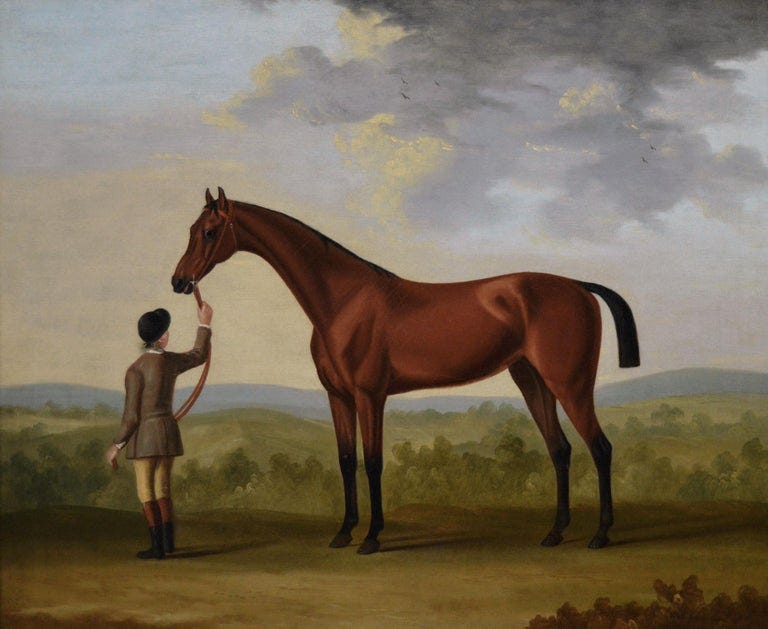
And so, according to Buchenau, Wolff’s thoughtful course along the lines of Pleasure was more Baconian than Late Scholastic or Leibnizian. Wolff pursues the pleasures of invention as noted by Bacon more than the more cosmic or transcendental priorities concealed in the notions of beauty and purposefulness in Leibnitz and Kant. In questions of judging beauty, Wolff is more interested in how the knowledge of how something is assembled (a building or a painting or a furnace) enhances the pleasure of examining a construction – the more you know, the more you can enjoy the inventiveness shown in an object. Kant avoids more purely cognitive contemplations of beauty partly by suggesting specialized judgements – ie, judgements with an aim or personal concern (not objects with purposes) – are not aesthetic judgements of free beauty but simpler cases of cognitive activity wherein the beauty is “adherent” (pulchritudo adhaerens ) as in the more intellectual effort of judging the beauty of a person or a horse or an ax from one’s possibly all-too-self-interested point of view.
However, Kant does go along with some of Wolff’s more innovative points about teleology and beauty. For example, both Wolff and Kant assume that clarity is an important part of a successfully completed aesthetic perception. This is different from the assumption in Leibnitz and others that a certain amount of murkiness is a crucial element in the human perception of beauty, partly because for people like Leibnitz truly perceiving the Truth, Justice, Good and Evil of a thing means seeing the essence of the thing as it truly is rather than just what the senses show about the thing. I guess this is because things exist (in Scholastic or Leibnitzian terms) by realizing in their essences – ie fully transposing their essence into reality. This realization can be jammed, so to speak, by interference from other essences on the same wavelength or something and then the Purity of Essence becomes inherently elusive and sensory actions don’t help much. An effusion of murkiness works like some kind of air freshener – clearing the competing not-quite realized essences from the air and revealing just the true proper amount of inadequate realizations to allow the True beauty of the thing to shine by its essential power through the jumbled emanations of this perfect world in which we live, it seems. Possibly the need for murk is might explain the number of times in the Enlightenment that beauty requires the “harmony of parts”…what could be happening there is that in the murk the essences merge into a whole that is greater than the indistinct sum of its murky parts thus justifying the proper moral distrust of the senses and affirming the mental priority of mentally perceiving (with the inner eye of Truth not the outer eyes that can be deceived) the right mix of murky essences. In Kant, of course, the dynamics of the Sublime are the topic (if not the reality) where this oscillation between what you can actually see and what you actually dread takes place. For Wolff and Kant, Beauty does not have this problematic relation with perception itself and questions of the relation of what you actually see with what you might try to mentally piece together only increases the visionary intensity of the oscillation between what you see and what you think you desire in a range of other contexts.
So, for Wolff, the senses work okay, or reasonably well or at least well enough to get you into some trouble. In the case of beauty and pleasure, for Wolff, teleology allows a work-around in the case where perception doesn’t quite properly transcribe the object. No murk is required to explain how the beauty of the thing can be perceived despite the natural interference of worldly things.
For, as Wolff points out, it is enough for a thing to “look like” it has some wonderful (teleological) purposeful function for a person to derive pleasure from it – no properly realized essences required since the senses work to some degree to reveal what can be interpreted as a properly fulfilled teleological instance– though, presumably the essences are there somewhere, they are not essential for pleasure. Of course, this leads to the problem of true and false pleasure, an ethical problem that some clarity may suffice to resolve, one hopes, though not in unhealthy Aesthetic terms.
For that matter, by the 1740s (as Buchenau notes with citations from the “Preliminary Discourse…”), Wolff (again in a Baconian rather than a Leibnitzian way), another way to get around the problem of essences is by crafting a way to discover hitherto hidden secrets of Nature. Or as he puts it, “Art often reduces secret historical knowledge to common historical knowledge.” In Wolffian terms, “art” covers everything from craftsmanship to experimental results and everything in between, including what we call art. And it doesn’t matter if the newly revealed knowledge was found by direct sensation or by any chain of indirect manipulations – you can dig out the Truth if you try.
I didn’t really get to Baumgarten this time, but maybe next time, one hopes, purely discursively.
Sources:
Alexander Baumgarten, Metaphysics, translated with Kant’s annotations, Courtney D. Fugate and John Hymers, Bloomsbury, 2013
Helmut Pulte, “Order of Nature and Orders of Science” in Between Leibnitz, Newton and Kant, ed Wolfgang Lefevre, Springer, 2023
Hartmut Hecht, “Leibnitz’s Concept of Possible Worlds and the Analysis of Motion in Eighteenth Century Physics” in Between Leibnitz, Newton and Kant, ed Wolfgang Lefevre, Springer, 2023
Nabeel Hamid’s Paper
https://aeon.co/essays/why-we-should-recover-the-philosophy-of-christian-wolff
Eric Watkins Chapter in Kant and the Early Moderns, Edited by Daniel Garber and Beatrice Longuenesse, Princeton, 2008
Frederick C. Beiser Diotima’s Children German Aesthetic Rationalism from Leibnitz to Lessing, Oxford, 2009
https://saxoinstitute.ku.dk/research/history/radical-pietism-in-northern-europe/
https://plato.stanford.edu/entries/wolff-christian/
IMMANUEL KANT Critique of the power of judgment edited by PAUL GUYER University of Pennsylvania translated by PAUL GUYER University of Pennsylvania ERIC MATTHEWS University of Aberdeen, Cambridge U, 2000
\Anthony Grafton,
“PROLEGOMENA TO FRIEDRICH AUGUST WOLF”, J Warburg and Courtauld Institute, vol 44, 1981
Stefanie Buchenau. The Founding of Aesthetics in the German Enlightenment:
The Art of Invention and the Invention of Art. Cambridge-New York: Cambridge University Press, 2013.
Mulsow, Martin, trans H. C. Erik Midelfort (!yes!) The Hidden Origins of the German Enlightenment, Cambridge U, 2023
Some earlier posts:
Divertimento: Re-plumbing

I obviously got sidetracked a bit from Wolff. Really, in the 1720s and 30s, he is kind of on the back burner being famous and redoing all of his original work in German in Latin so that it will be more widely accessible. What diverted me was the problem of describing why the Cartesian-Leibnitzian imagery of a universe full of rationally (by God, the ver…
La Belle Wolffienne

The six volumes of La Belle Wolffienne were part of the gradual, slow, and reluctant mid-eighteenth-century drift away from the infinite Divinely pre-conceived Leibnitzian perfect universes and very gradually toward a not-particularly perfect Newtonian universe with its strangely sparse and simple clockwork.
Genius in Two Nutshells

The above is a section of the Iliad surrounded by scholia. The manuscript is Venetus A (Venice, Biblioteca Marciana, gr. 822).
And topics:
Guide to Topics in Some Order

I was wondering how to set the background for what I thought I was trying to say about Schelling’s Ages of the World, a series of strange texts amounting to several different versions of thousands of pages of attempts to work out the stages of how the mind and the natural world emerged from a slew of ever-changing imaginary abyssal environments that he …