

Divertimento: Re-plumbing
The Cosmic Flow of Divine Knowledge


I obviously got sidetracked a bit from Wolff. Really, in the 1720s and 30s, he is kind of on the back burner being famous and redoing all of his original work in German in Latin so that it will be more widely accessible. What diverted me was the problem of describing why the Cartesian-Leibnitzian imagery of a universe full of rationally (by God, the very definition of a completely rational being) predetermined vortices running in pre-established harmony seemed so much more coherent and convincing than the ramshackle assemblage of Newton’s clockwork universe running on what was, by definition, irrational action-at -a-distance. There is, of course, a historicist description of how the Scientific Revolution led to the Enlightenment. Of course, meanwhile, on the other hand, if you look at some actual stuff within the timeframe of the “Scientific Revolution”, you are much more likely to find Late Scholasticism contriving a very complex and powerful idea of Divine Grace, the Scientia Media, that drives some entirely new images of the cosmos as a perfectly balanced flow of predetermined probabilities. I described this earlier in these posts, but the impact of the imagery of a perfectly rational cosmos seems to be far more pervasive than any amount of observationally derived “Science” all the way up to Kant’s suggestion that the apparent pervasive “rationality” of the cosmos was more of a ramshackle arrangement of considerations and constructs and conceptual tools somewhere in the vicinity of the human mind rather than in the pre-ordained flow of the universe. The idea of probability was also going to need some reworking once the cosmos no longer had a built-in predetermined flow based on probabilities as they were before the universe began, but that reimaging wouldn’t happen until Boltzmann worked on thermodynamics. And yet even after Boltzmann’s work, the popular understanding of thermodynamics still in the 21st century appears to be based as much on the Leibnitzian flow of Divine Grace clear to Heat Death via the Scientia Media as anything else. As Always, I blame Planck and Leibnitz.
But on the other hand meanwhile that would seem to imply that the Enlightenment was much more than just the result of the supposed “Sciences” as they supposedly lumbered into being. Moreover, the actual sciences as we know them seem to have condensed into recognizable areas of concern in the same framework that surrounded Early Romanticism as the Enlightenment disappeared into Napoleonic gloom and the darkness of Hegelian Historicism.
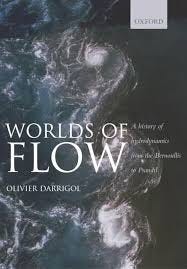
Anyway, in the 1730s, while Wolff was codifying something or other of an extensively rationalist nature and being extremely popular, there were some barely detectable shifts away from the immense cosmic store of Divine Leibnitzian reason and toward the cranky clockwork of a more Deist Newtonian view of the cosmos. The slight shifts seemed significant enough at the time for people to somewhat anxiously backdate them by 10 years in some cases. Bernoulli senior claimed (maybe just to appear to have been ahead of his sons) that by 1732 he had given up on the mechanics of Leibnitz’s rationally predetermined vortices and gone ahead in a hopeful Newtonian direction with his description of hydraulics (a term made current by the Bernoullis) – a direction that would not be defined in terms of equations until Euler’s work of 1755. See Olivier Darrigol’s Worlds of Flow down in the notes for details.

Another such barely detectable shift has been noted by Eric Watkins in Baumgarten’s 1739 version of Metaphysics (see sources for Watkins). In the Metaphysics, Baumgarten states that any composite body must contain some actual distinct substances. This is different from the Leibnitzian supposition (that probably haunted Thomasius with all his free-floating demonic effluvia) that everything in the universe was composed of tiny insubstantial mental units that could freely interpenetrate ad infinitum. Naturally such free-form mental units did not work well in Newton’s cranky clockwork constructions. Baumgarten went even further in his metaphysical replumbing of the Leibnitzian monadic flow; he proposed that not only did basic units of actual substance actually exist, but they all could be assigned to definite, separate, non-interpenetrating locations.
Baumgarten, a superficially Wolffian Pietist at Halle, also is somewhere in the midst of the Pietist drive to work out the implications of a universe that allows for some kind of human interaction within the flow of Divine grace. This Leibnitzian/Molinist flow of grace through every possible version of every possible set of events in every possible universe suggests some degree of human participation in that God is seen as having anticipated some human vagaries before allowing for the best of all possible versions of everything to proceed as planned. However, the Pietist view emphasized the practical side of this flow of grace. Theologically, they are Lutheran, but in terms of evaluating human behavior, they pay more attention to the fluid nature of human thought than to the infinitely optimized Leibnitzian/Molinist cosmic flow of God’s choices among infinite possibilities.

Another weird twist in the 1730s is Maupertuis’ 1732 lecture on how God decided to work out the Newtonian Law of Gravitation so that he could have a universe where extended impenetrable particles could have motions without simply continuously colliding all the time. In effect, his reading of God’s infinite wisdom leads to an avoidance of the mechanical vortex packed spaces of Leibnitz’s super-rational, super-Cartesian universe by opening up a Divinely-inspired Newtonian space where things don’t simply run into each other all the time. See Hartmut Hecht in sources for details.
Of course, what is really odd about Maupertuis’ 1732 lecture is the idea of a universe where things just happen to run into each other according to God’s Plan to let things collide a lot, but not all the time. The Divine plan is more of a decision to have a lot of interesting collisions but not too many. This is more a matter of Deist clockwork running out of control which was something that could not apparently be imagined without a lot of discomfort and even then only in a toy model of the Mind of God. What is very hard for us to imagine (in turn) is the picturing of a world where models are not models in our sense. Up until Kant, the idea that things just happened and then we made sense of them was not considered rational. Essentially, even for Deistic clockwork, the idea of a rational model always included the need to hook everything up to a metaphysically super-rational, ontologically structured cosmic model that would (by the definition of “Rational”) already have been built cosmically into the context of the model for the model to be considered rational. Or to put it another way, for most of the eighteenth century, models (or equations describing flows or orbits) were thought to work only because they effectively duplicated the sequence of sufficient reasons that drove the universe. The idea that a model was merely an effective approximation of some set of processes arbitrarily defined at some arbitrary level was more or less unthinkable until Kant pointed out that the human mind is where the apparent rationality of the universe is assembled and evaluated with an assortment of approximations. See Helmut Pulte’s article noted in sources for a detailed discussion of the typical Early Enlightenment disjunction between the “rationality” of metaphysical cosmic ontology and the use of observational data. Both had to be built into the evaluation of equations as descriptions of events or models of possible events and, of course (as Euler demonstrated in his Mechanica of 1736 and in all his later work on mechanics), Newtonian descriptions of such things as gravitational forces are merely observational and not rational in the cosmic, ontological, metaphysical sense that was required by the very strange version of rationality that was required during most of the Enlightenment.

Speaking of the requirements of rationality, next time we will look into Wolff’s invention of teleology and Baumgarten and Kant’s problems with Wolff’s insistence on the implied teleological perfection behind tasteful perceptions.
Sources:
Alexander Baumgarten, Metaphysics, translated with Kant’s annotations, Courtney D. Fugate and John Hymers, Bloomsbury, 2013
Helmut Pulte, “Order of Nature and Orders of Science” in Between Leibnitz, Newton and Kant, ed Wolfgang Lefevre, Springer, 2023
Hartmut Hecht, “Leibnitz’s Concept of Possible Worlds and the Analysis of Motion in Eighteenth Century Physics” in Between Leibnitz, Newton and Kant, ed Wolfgang Lefevre, Springer, 2023
Nabeel Hamid’s Paper
https://en.wikipedia.org/wiki/%C3%89milie_du_Ch%C3%A2telet
https://aeon.co/essays/why-we-should-recover-the-philosophy-of-christian-wolff
MOGENS LÆRKE
“A Circle Without a Circle: Ehrenfried Walther von Tschirnhaus’s Natural Scientific Method” Journal of Modern Philosophy, 2026
Eric Watkins Chapter in Kant and the Early Moderns, Edited by Daniel Garber and Beatrice Longuenesse, Princeton, 2008
Frederick C. Beiser Diotima’s Children German Aesthetic Rationalism from Leibnitz to Lessing, Oxford, 2009
Jonathan Israel, The Radical Enlightenment, Oxford 2001
https://saxoinstitute.ku.dk/research/history/radical-pietism-in-northern-europe/
https://plato.stanford.edu/entries/wolff-christian/
Richard S. Westfall, Never at Rest, Cambridge U, 1980
Olivier Darrigol, Worlds of Flow, Oxford, 2005
IMMANUEL KANT Critique of the power of judgment edited by PAUL GUYER University of Pennsylvania translated by PAUL GUYER University of Pennsylvania ERIC MATTHEWS University of Aberdeen, Cambridge U, 2000
G. W. Leibniz and Samuel Clarke, Correspondence Edited, with Introduction, by Roger Ariew, Hackett Publishing Company, Inc. 2000
https://antigonejournal.com/2022/04/homer-iliad-scholia/
https://en.wikipedia.org/wiki/Philip_Melanchthon
https://en.wikipedia.org/wiki/Molinism
Juan Garcia’s article:
Anthony Grafton,
“PROLEGOMENA TO FRIEDRICH AUGUST WOLF”, J Warburg and Courtauld Institute, vol 44, 1981
Stefanie Buchenau. The Founding of Aesthetics in the German Enlightenment:
The Art of Invention and the Invention of Art. Cambridge-New York: Cambridge University Press, 2013.
Mulsow, Martin, trans H. C. Erik Midelfort (!yes!) The Hidden Origins of the German Enlightenment, Cambridge U, 2023
Beyond Dordt and De Auxiliis The Dynamics of Protestant and Catholic Soteriology in the Sixteenth and Seventeenth Centuries Edited by Jordan J. Ballor, Matthew T. Gaetano, and David S. Sytsma, Brill, 2019
Clark, Christopher Iron Kingdom, Harvard U, 2006
Some earlier posts:
La Belle Wolffienne

The six volumes of La Belle Wolffienne were part of the gradual, slow, and reluctant mid-eighteenth-century drift away from the infinite Divinely pre-conceived Leibnitzian perfect universes and very gradually toward a not-particularly perfect Newtonian universe with its strangely sparse and simple clockwork.
Genius in Two Nutshells

The above is a section of the Iliad surrounded by scholia. The manuscript is Venetus A (Venice, Biblioteca Marciana, gr. 822).
And topics:
Guide to Topics in Some Order

I was wondering how to set the background for what I thought I was trying to say about Schelling’s Ages of the World, a series of strange texts amounting to several different versions of thousands of pages of attempts to work out the stages of how the mind and the natural world emerged from a slew of ever-changing imaginary abyssal environments that he …
Thank you for sending this, Peter. I find the shift you trace from a cosmos understood as an inherently rational, divinely pre-organized flow to Kant’s idea that its apparent rationality is assembled in the human mind especially fascinating. It touches directly on something I have been thinking about: do we impose narrative structure on the universe, or does storytelling reproduce a structure already present within it?
My work has increasingly led me toward the second possibility. I deeply believe that the psyche is organized according to a precise order, and that my research can demonstrate it. My entire body of work is built upon this premise. By tracing the correspondence between psyche and story, I am ultimately tracing the same order that organizes the universe itself.
I need to read this again slowly, but it arrived at a strangely perfect moment in my own research. Thank you!