

La Belle Wolffienne
Wolff Becomes a Cultural Force

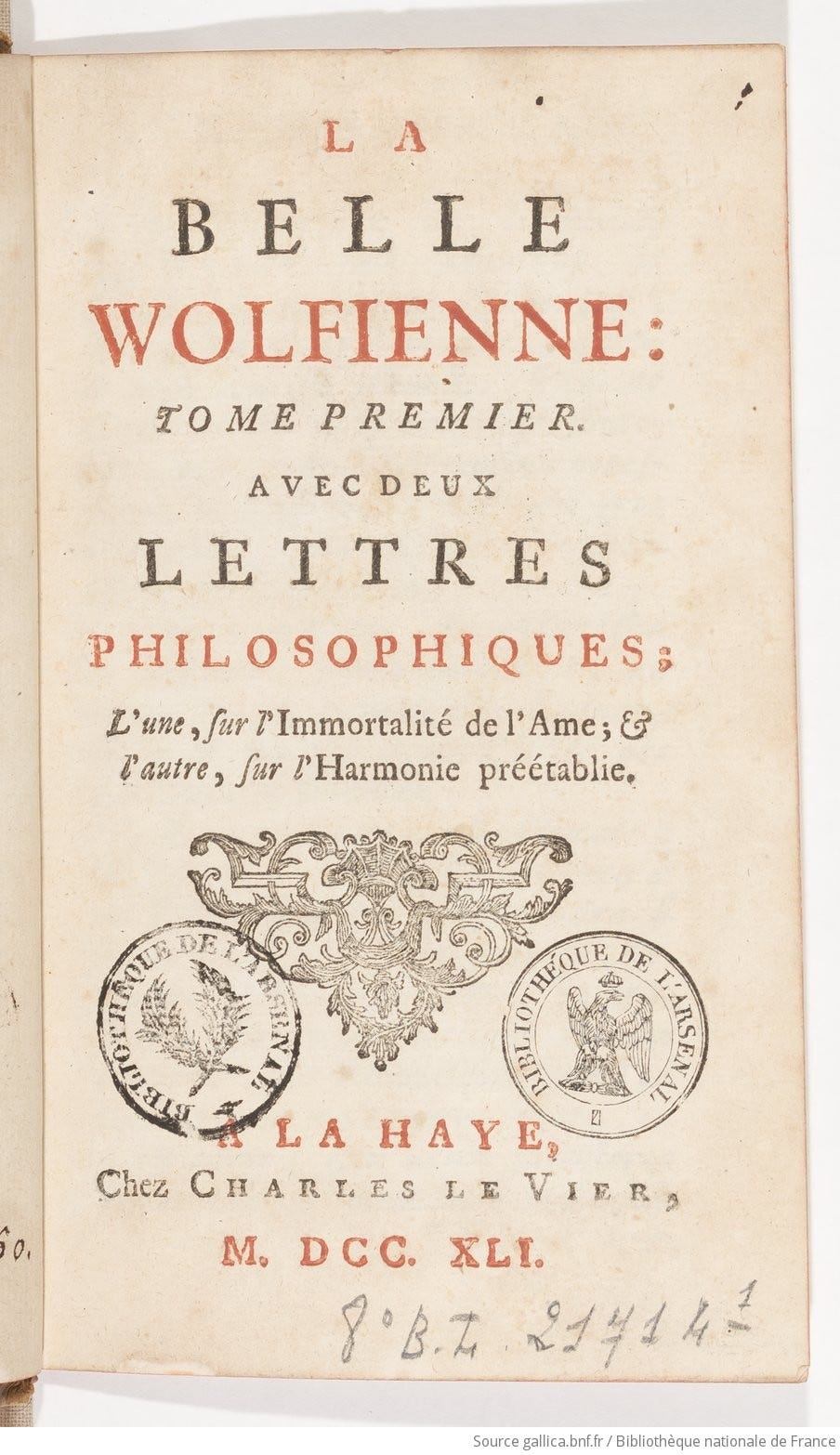
The six volumes of La Belle Wolffienne were part of the gradual, slow, and reluctant mid-eighteenth-century drift away from the infinite Divinely pre-conceived Leibnitzian perfect universes and very gradually toward a not-particularly perfect Newtonian universe with its strangely sparse and simple clockwork.
The Wolffian events of say 1723-1740 unsurprisingly seem to belong to a very different cultural world from ours, so much so that we really have a hard time imagining how it is that mechanistic Cartesian vortex physics seemed much more plausible than Newton’s much simpler schemes or the need to have Genius defined philosophically as often as possible or the fact that “mechanical” in 1720 on the continent meant “use as many invisible vortices as you need but never do that Newtonian stuff”....
Not only that but now for a bit of a radical departure. I’m just going to quote a big chunk of the Stanford philosophy thing about Wolff because it is the most reliably confirmed and neutral version of what happened that I can find:
Wolff’s expanding philosophical activity, especially concerning topics in natural theology, as well as his popularity as a lecturer and growing influence within the university drew the ire of his Pietist colleagues in the faculty of theology, including August Hermann Francke (1663–1723), the founder of the famous Waisenhaus (orphanage), and Joachim Lange (1670–1744). They took exception to a number of doctrines expressed in Wolff’s German Metaphysics, including its privileging of the intellect to the will, its apparent demotion of freedom to mere spontaneity, and the diminished role played by revelation in matters of theological interest. While the Pietists were at first content to wage a behind-the-scenes campaign, Wolff’s address as outgoing rector of the university on 12 July 1721, in which he upheld the compatibility of Confucian moral philosophy with the acquisition of virtue (and consequently denied the indispensability of Christian revelation for morality), led to a significant escalation of the dispute. Wolff, asserting the independence of the philosophical faculty, refused to submit the text of his lecture for subsequent examination by the faculty of theology, a conflict that came to involve the university senate and even king Friedrich Wilhelm I (the “soldier king”) himself. While Wolff enjoyed the support of officials within the royal court, the Pietists exploited their personal connections with the king, who was allegedly persuaded that Wolff’s endorsement of the pre-established harmony represented a threat to military discipline (as the acts of deserters would be pre-established and so not subject to sanction). On 8 November 1723, the king issued an edict removing Wolff from his university position and ordering him to leave the lands of Electoral Brandenburg within 48 hours on pain of hanging. The edict was received in Halle four days later, on 12 November 1723, and Wolff immediately departed Halle, pausing once he crossed the Saale river (into Saxony) to refund the fees of his students for his undelivered lectures.
While Wolff’s Pietist colleagues celebrated Wolff’s exile (reportedly even from the pulpit), it ultimately served only to enhance Wolff’s reputation, bringing him to the attention of luminaries of the Enlightenment, including Voltaire. He was immediately offered positions in Leipzig and Marburg, the latter of which he accepted though a special exemption had to be granted to allow a Lutheran to teach at a Reformed university. And even as the dispute with his critics continued, generating a substantial literature in its own right, Wolff managed during his Marburg years to complete a reworked Latin presentation of his theoretical philosophy intended to make his ideas available to a pan-European audience. These texts include: Philosophia rationalis sive Logica (Rational Philosophy, or Logic) of 1728 [the Latin Logic, hereafter LL], the first part of which is the Discursus praeliminaris de philosophia in genere (Preliminary Discourse on Philosophy in General) [DP]; the Philosophia prima sive Ontologia (First Philosophy, or Ontology) of 1730 [Ont.]; Cosmologia generalis (General Cosmology) of 1731 [Cosm.]; Psychologia empirica (Empirical Psychology) of 1732 [EP]; the Psychologia rationalis (Rational Psychology) of 1734 [RP]; and the two-volume Theologia naturalis (Natural Theology) of 1736–37 [NT].
Friedrich Wilhelm I eventually thought better of his precipitous action against Wolff, as he attempted in 1733 to entice him (unsuccessfully) back to Halle and in 1736 lifted a prohibition he had enacted against the teaching of Wolffian texts. However, Wolff remained in Marburg, collecting tributes and memberships in learned societies, until the ascension of Friedrich Wilhelm I’s son, Friedrich II (the Great), himself an enlightened monarch and admirer of Wolff. Wolff accepted the new king’s offer of a professorship and vice-chancellorship at his previous institution in Halle and returned to the city on 6 December 1740 to take up his new position. Wolff continued to lecture and publish actively, with his later efforts devoted particularly to works on the law of peoples, natural law, and ethics. He died in Halle on 9 April 1754.
Right, so now after that major textual event, we turn to the more-or-less standard account of the whole Wolffian extravaganza, which is (I think) in Jonathan Israel’s Radical Enlightenment, where the Wolffian fracas somehow just flows right into the whole proto-Newtonian parade with Voltaire and Émilie le Tonnelier de Breteuil, marquise Du Châtelet-Lomont resulting (near as I can tell) in a very weird Leibnitzian cosmos with some Newtonian events happening like clockwork. Yes, the clockwork accusations fly (and to adopt Israel’s avalanche of thunderous orations) like a thousand hammer-blows a second onto everyone’s Enlightened heads. The Pietists, of course, accuse Wolff of some clockwork mechanisms of efficacious grace etc. which seems very unfair since Wolff seems to have been a perfectly harmless Leibnitzian revamped Cartesian busily hammering out hammer-blows against Spinozian thoughts.
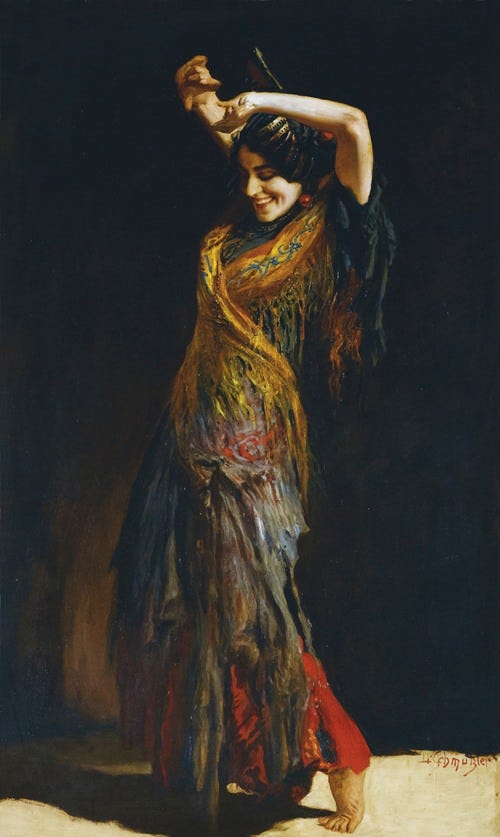
That’s Lili Marberg being Salome sometime around 1900.
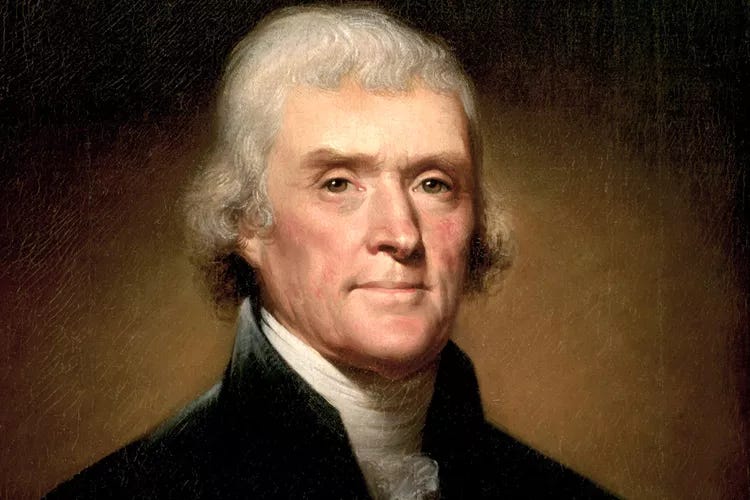
Okay, and I was sort of happy even with all standard account stuff until I found out that Thomas Jefferson carefully underlined some especially Confucian parts of Wolff’s discussion of Confucius. Hopefully no one other than me with a need to invent Thomas Jefferson quotes will ever find out about this. The source doesn’t exactly say verbatim what Thomas Jefferson found worth underlining in his best underlinage so we are left hanging by that same underlined thread that hooks up all mental minds to the guy doing some free speech and that guy on a mountain top above the clouds. Is there no justice? Hang onto your wallets, folks – Thomas Jefferson just underlined something in Wolff’s discussion of Confucius.

That’s a microscopic organism.
But. Calm down. So, to kind of pull out some things in there – Wolff left an (Unorthodox) Lutheran Pietist university in Prussia, escaped through Saxony (Orthodox Lutheran territory) and got a nice spot at a Calvinist university in Hesse-Kassel. He had been sentenced to this instant exile on pain of death for a number of things he did that offended Pietists at least from 1721 on.
Aside from all the clockwork hammer-blows, let’s look into what seems to have been the problems that the Pietists had with Wolff, at least according to the Stanford Philosophy website.
1) The interest in Confucian ethics
2) that Wolff’s endorsement of the pre-established harmony represented a threat to military discipline
3) privileging of the intellect to the will
4) its apparent demotion of freedom to mere spontaneity
5) the diminished role played by revelation in matters of theological interest
And from other sources (ie, Radical Enlightenment) we know that Wolff was also accused of being a crypto-Spinozist. That was a standard accusation against nearly everyone in 1720 but he was seen to be even worse than the average Spinozist since he pretended to spend a lot of time refuting Spinozist ideas but doing a bad job of it so as to secretly convince people in a subliminal way to accidentally become Spinozists. Thank God Thomas Jefferson never seems to have underlined any of that either in Wolff or in some intensely Pietist exposés of Wolff’s subliminal arguments.
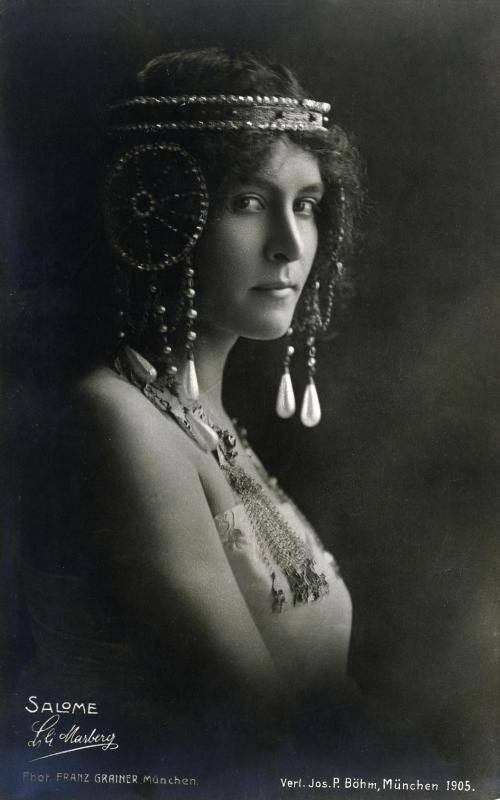
That’s not Thomas Jefferson, but a Lili Marberg postcard from 1905.
Okay, but what would Thomas Jefferson say? Something like “If somebody teaches you the wrong way to do a bad job, you might well subsequently teach a man to fish but he will drown. Nuff said.”
Anyway, the Pietist problems mostly sound like the usual objections to the Molinist multi-universe construction for how efficacious grace works. As opposed to all that, the Pietist view of how efficacious grace works put an emphasis on a complex personal dynamic involving free will not mental intelligence, but also the readiness of the mind to accept the flow of grace into its daily activity. This is a bit paradoxical since there is another dynamic where the Pietist emphasis on good constructive social behavior, strangely enough seems to have caused them to look more carefully into what kinds of thoughtful approaches would result in constructive behavior which sort of undercuts their emphasis on pure free will since looking at mental states that produce constructive social behavior is a different kettle of fish as we will see eventually.
So, given the constructive paradoxes of pietism, Wolff might have gotten himself in trouble because the Pietist interest in how certain kinds of thoughtful approaches would have constructive behavioral results did not seem that different from his own interest in how an awareness of inventive modes of thought could have pleasant or even rationally productive outcomes. Essentially, putting a person who was busy escaping from the over-rationalized Leibnitzian Cartesian construct with a cosmically determined flow of cause and effect built on the model of Molinist grace, in the same university with people (the Pietists) who were in some way doing a parallel attempt to escape – in their case from a cosmically determined flow of grace – was likely to cause more friction and misunderstanding, at least initially, than any form of constructive cooperation.
Anyway, well before 1720 (there is apparently an English translation of Wolff’s “German Metaphysics” – the work that offended the Pietists most – printed in 1720) Wolff wrote the work that would be popularized for the Wolffian e-girls in Paris in the 1740s in Johann Samuel Formey’s six volume novel of ideas La Belle Wolffienne.
In the next post, we will look more deeply into what Wolff was trying to do that would lead to the definition of Aesthetics as a philosophical approach.
Sources:
https://en.wikipedia.org/wiki/%C3%89milie_du_Ch%C3%A2telet
https://aeon.co/essays/why-we-should-recover-the-philosophy-of-christian-wolff
MOGENS LÆRKE
“A Circle Without a Circle: Ehrenfried Walther von Tschirnhaus’s Natural Scientific Method” Journal of Modern Philosophy, 2026
Jonathan Israel, The Radical Enlightenment, Oxford 2001
https://saxoinstitute.ku.dk/research/history/radical-pietism-in-northern-europe/
https://plato.stanford.edu/entries/wolff-christian/
Richard S. Westfall, Never at Rest, Cambridge U, 1980
IMMANUEL KANT Critique of the power of judgment edited by PAUL GUYER University of Pennsylvania translated by PAUL GUYER University of Pennsylvania ERIC MATTHEWS University of Aberdeen, Cambridge U, 2000
G. W. Leibniz and Samuel Clarke, Correspondence Edited, with Introduction, by Roger Ariew, Hackett Publishing Company, Inc. 2000
https://antigonejournal.com/2022/04/homer-iliad-scholia/
https://en.wikipedia.org/wiki/Philip_Melanchthon
https://en.wikipedia.org/wiki/Molinism
Juan Garcia’s article:
Anthony Grafton,
“PROLEGOMENA TO FRIEDRICH AUGUST WOLF”, J Warburg and Courtauld Institute, vol 44, 1981
Stefanie Buchenau. The Founding of Aesthetics in the German Enlightenment:
The Art of Invention and the Invention of Art. Cambridge-New York: Cambridge University Press, 2013.
Mulsow, Martin, trans H. C. Erik Midelfort (!yes!) The Hidden Origins of the German Enlightenment, Cambridge U, 2023
Beyond Dordt and De Auxiliis The Dynamics of Protestant and Catholic Soteriology in the Sixteenth and Seventeenth Centuries Edited by Jordan J. Ballor, Matthew T. Gaetano, and David S. Sytsma, Brill, 2019
Clark, Christopher Iron Kingdom, Harvard U, 2006
And the post that came just before this one:
Genius in Two Nutshells

The above is a section of the Iliad surrounded by scholia. The manuscript is Venetus A (Venice, Biblioteca Marciana, gr. 822).
And topics:
Guide to Topics in Some Order

I was wondering how to set the background for what I thought I was trying to say about Schelling’s Ages of the World, a series of strange texts amounting to several different versions of thousands of pages of attempts to work out the stages of how the mind and the natural world emerged from a slew of ever-changing imaginary abyssal environments that he …