

Provisional Anchor
For the Cluster of Excellence Series

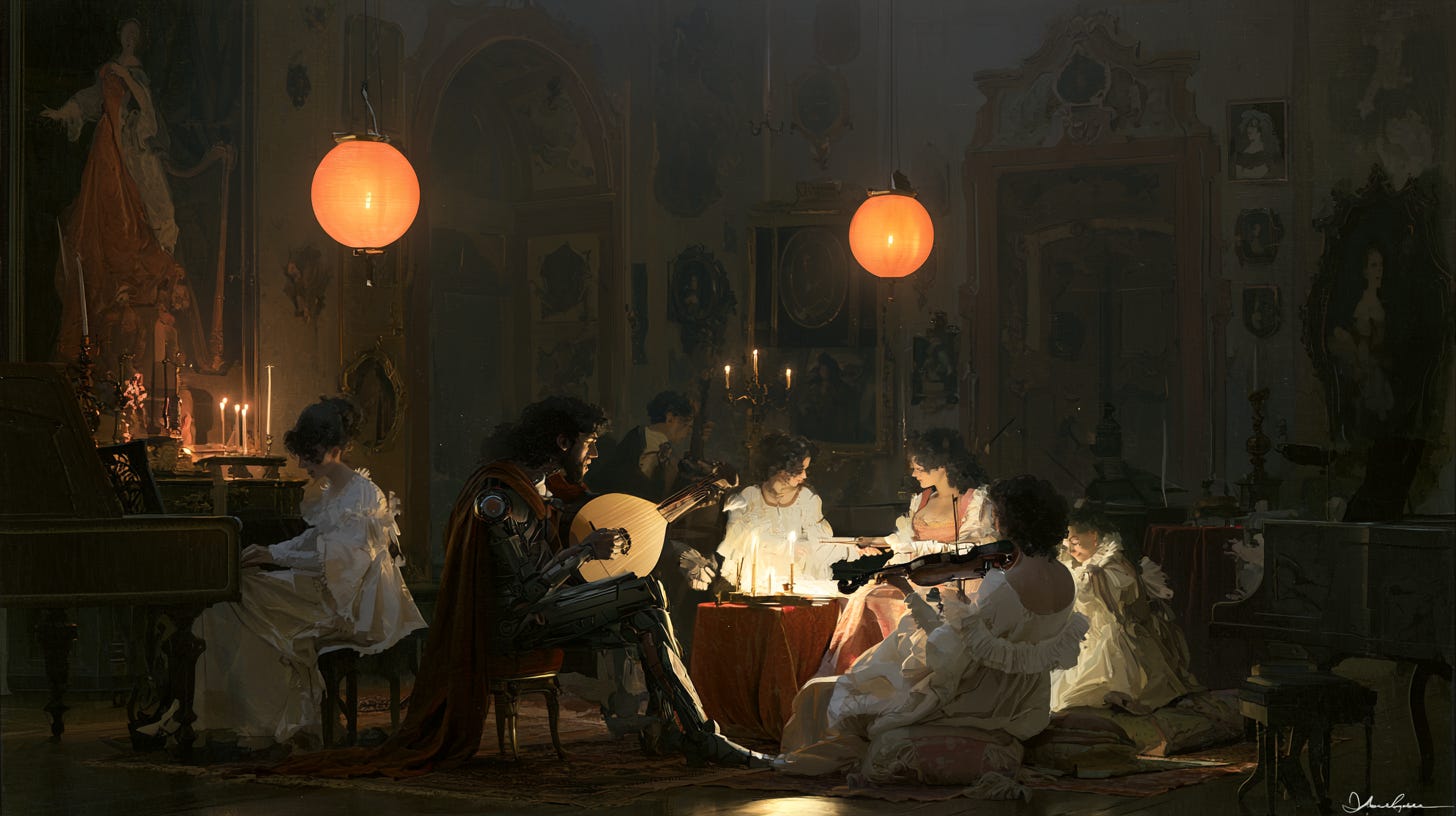
This might help people get started. It’s mostly about Scud, but Scud is a crucial character in the new version of the novel that is to be serialized.
Scud (supposedly Scud Rictus Robot-at-Arms according to his business cards) wandered into an early draft of Dangerous Gifts. Eventually, one version (or build) of him emerged as a close ally of the cosmically accursed anti-hero of that series. But due to the fact that Scud had worked for both the overly bloodthirsty Mistress of Goodness, Ninhursanga the Lady of Heaven and her new enemy, the ick-dreading Nymph of Nightmares, Melinoe as well as Bravado the collector, Scud had many plot-hole-fixing uses. The fact that there were several versions of Scud around (951, 952 and 953, I believe) was also handy.
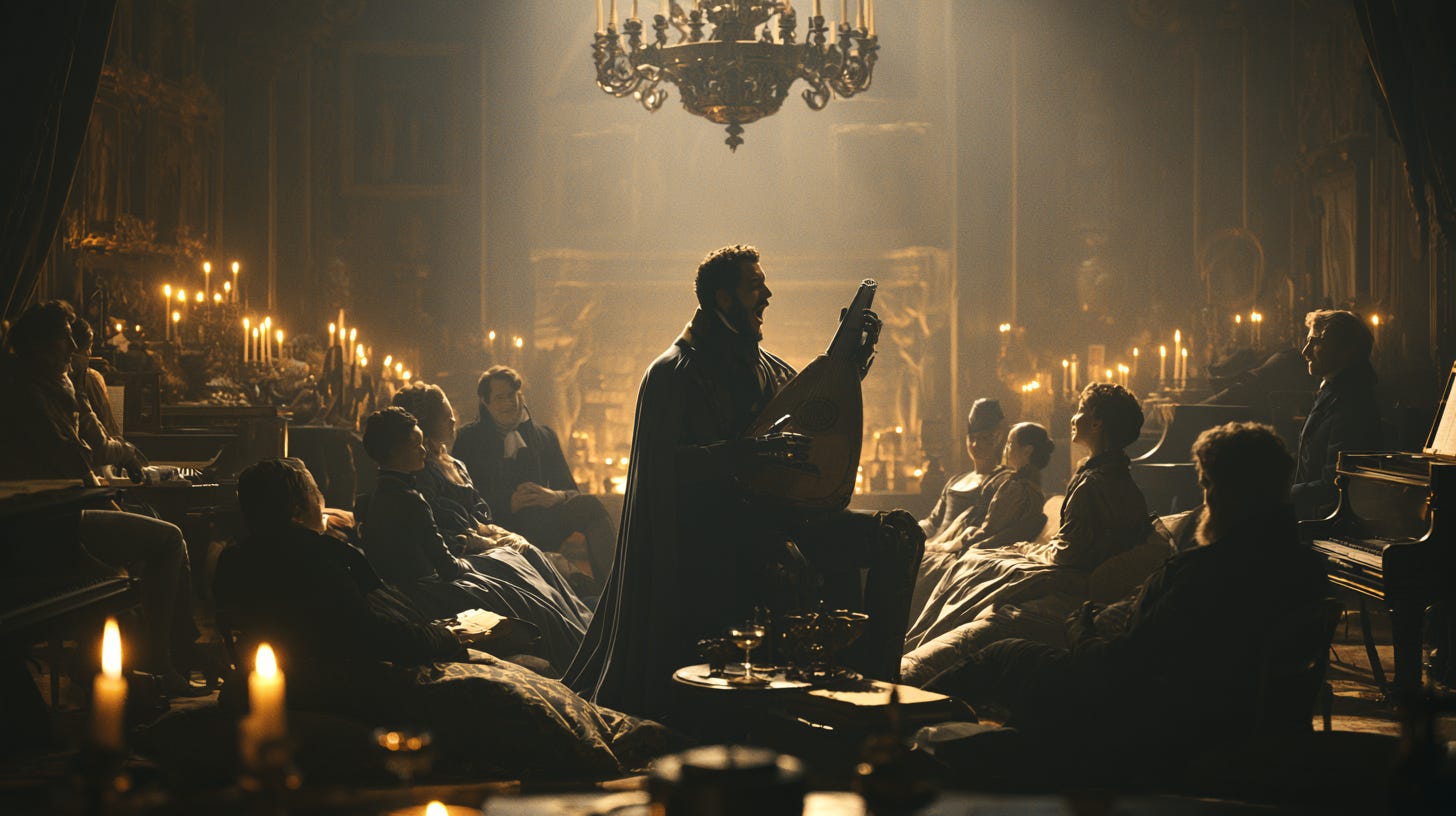
Scud’s business cards say, “Scud Rictus Robot-at-Arms” and he seems to be the only being in any of the half-dozen series available for scrutiny who has any business cards. His major talent (aside from being a multi-talented robot) is musical; he can sing songs of all sorts and strum along on a lute or chitarrone.
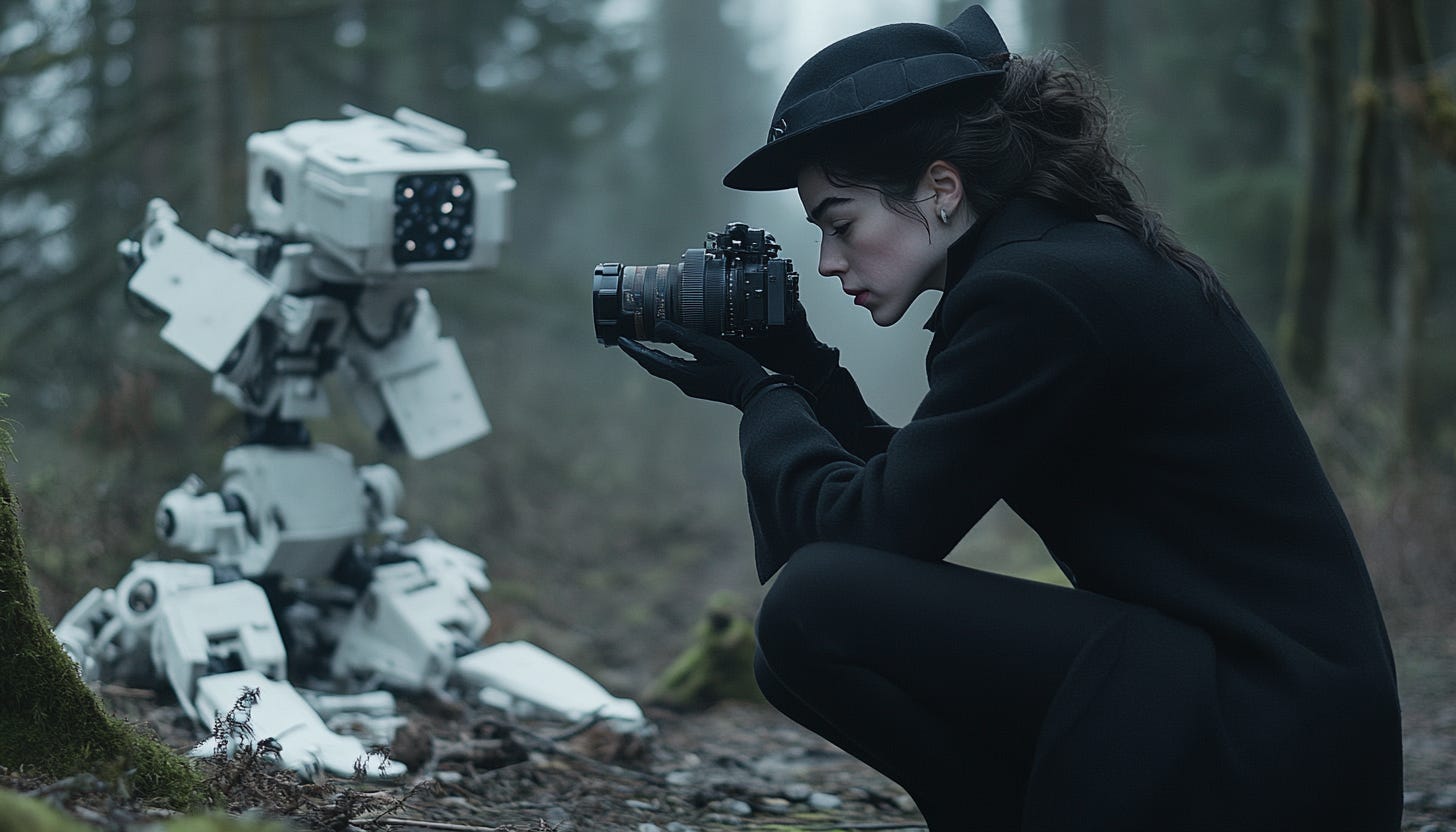
Jane, of the Nick and Jane stories, looking at the abandoned robot shell of a robot ghost:
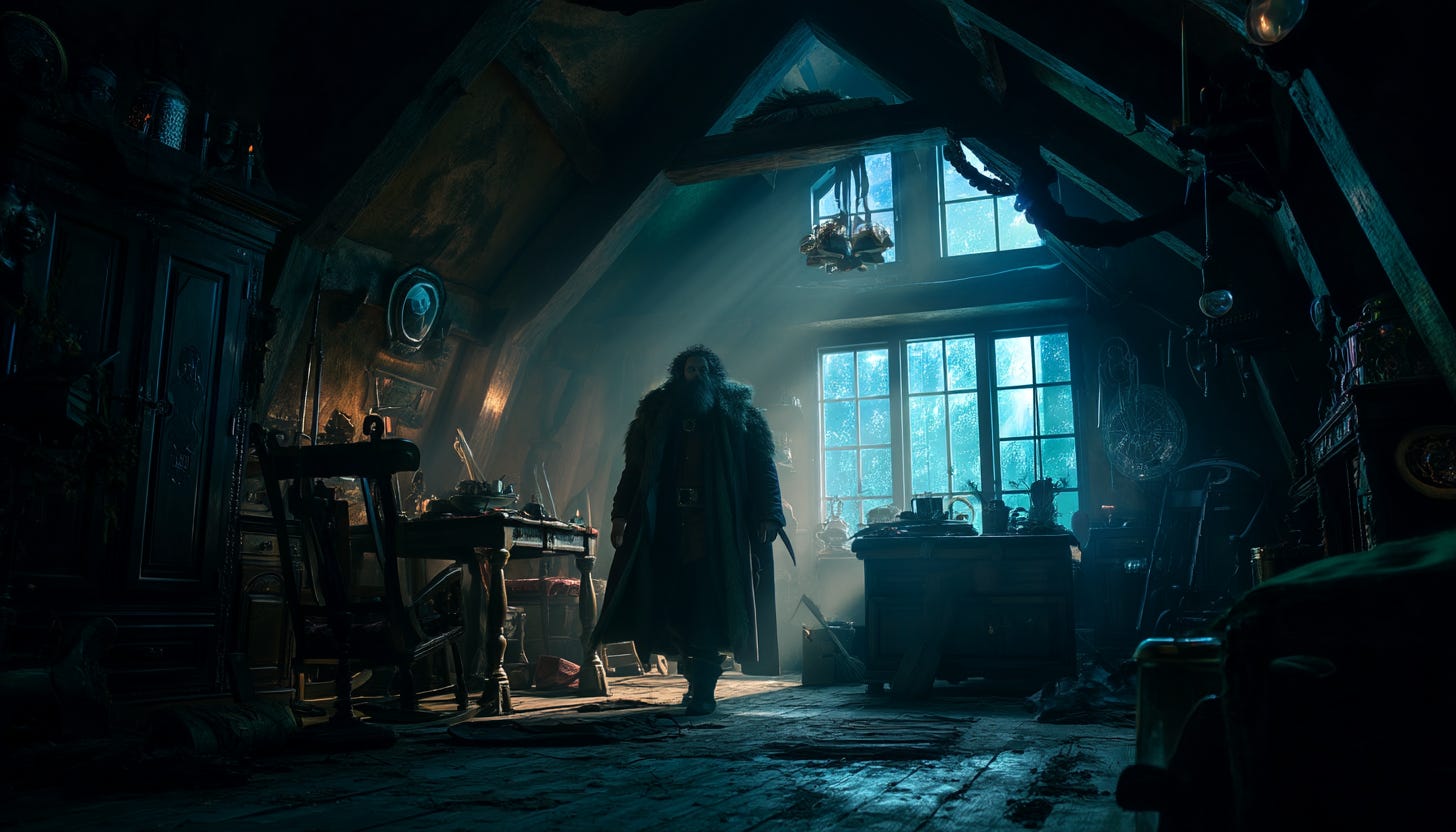
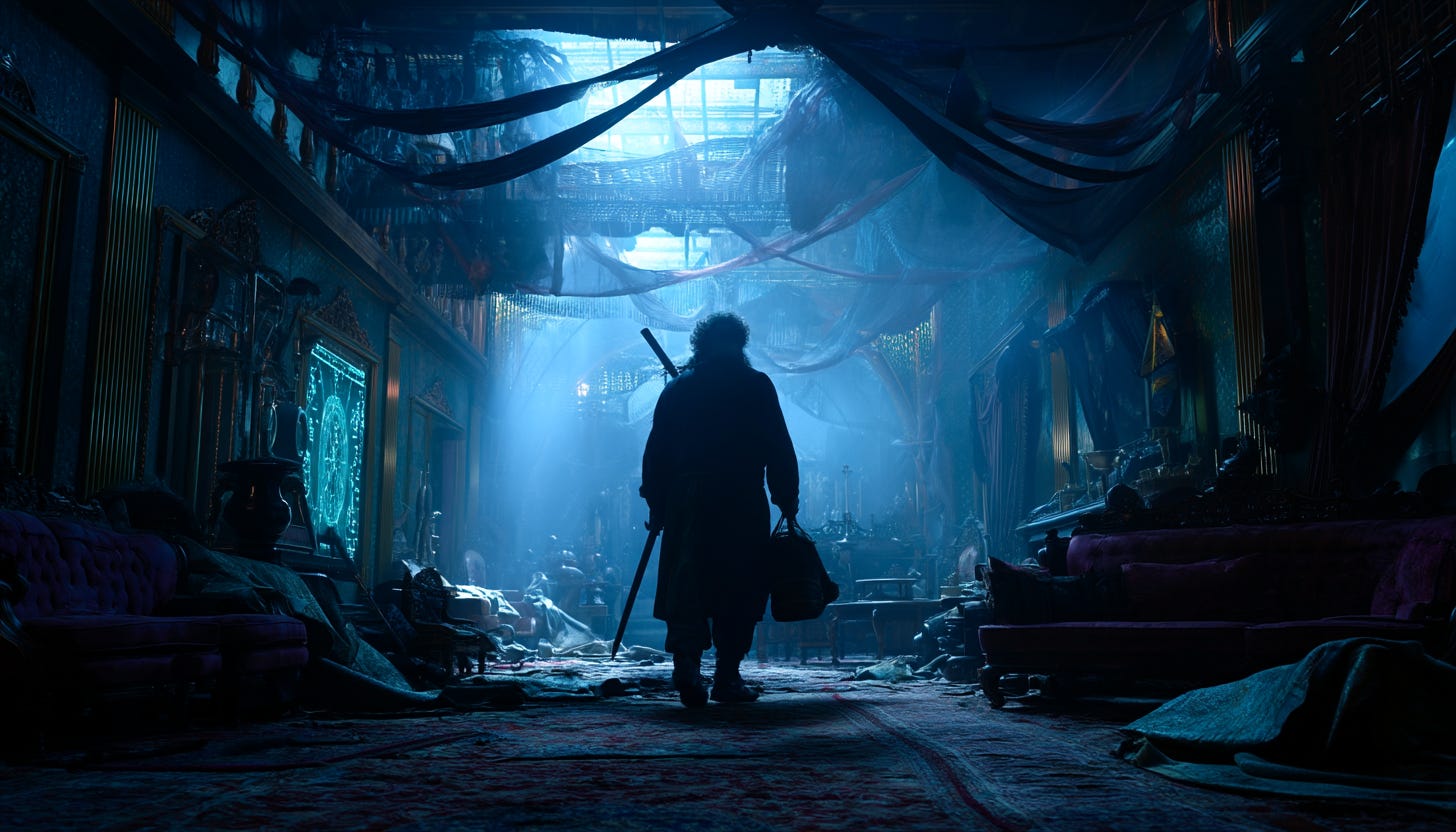
I’m pretty sure he will be in Cluster of Excellence.
Here are chapters 7,8, and 9 of Red Canyon in the Dangerous Gifts series where he enters the story:
Chapter 7: Umbral
After the near-mutiny, the escape from disaster and the letter delivered by the fair-tressed Nereid Amatheia, Doyle and the Knot-imps took over the basic duties of keeping the ketch on course and out of trouble while Scrappy and Captain Dean dealt with the finer points of metaphysical navigation between adjacent Baumgarten worlds. “It’s really a series,” said the captain to Scrappy one afternoon when rainbow curtains of auroras blocked their way to Graylot, the world of abandoned parking lots that sat like an unfriendly octopus on their shortest way to Umbral.
“Series?” whistled Scrappy uncertainly through his eyestalks.
Scrappy and Dean were in the cockpit. Doyle peeked in to see what was happening with getting around the rainbow curtains of auroras thing.
“Sure.” Dean pointed at the resonator relay orb. It showed the kinds of glowing tendrils of swirling light that Doyle had seen in the orbs back in the bunkhouse under the radar tower where Nell had read his fate. “Notice the spectral groupings around the nodes.”
Doyle stared into the resonator relay orb. Dean looked up and noticed Doyle was there.
Dean said proudly, “Scrappy is going to be a great navigator someday.”
Doyle nodded. He didn’t care about Scrappy. He left the pilot house and went down to the galley. Dud was there peering into the fridge. Doyle went back to his campaign of trying to get Dud to tell him where Captain Dean had been trying to go when they accidentally ended up in Hullabaloo. He asked Dud about it yet again.
Dud, who was wearing a pirate costume, closed the fridge and said (for the two-dozenth time), “You’re leaving Swiftsure at Umbral. There’s no reason for you to know anything more about the fate of Captain Dean.”
This time, Doyle had an inspiration. Maybe it was the pile of potato chips sitting next to a cup of olive oil on the counter by the fridge. Somehow that made him think things over in a new way. He quit worrying about how to get out of the New Extreme Indexing Service business without losing a lot of up-market re-indexing status points. Instead, Doyle turned his mind briefly to the problem of getting Dud to explain what Captain Dean had been trying to do when he tampered with the monstrous resonator that Lenny and Nell provided to be placed on Swiftsure to get Doyle back to Sunjourney. The question was: what would tempt Dud? Not potato chips or olive oil. Maybe something else.
Doyle said to Dud, “Maybe I can help Captain Dean. Or maybe I could if I knew where he was trying to go. After all, the goddess did drop me a letter.”
“That was an extremely powerful nymph that dropped you a letter,” said Dud warily.
“I might be able to get the divine beings who are governing Captain Dean’s fate to take a milder view of his doomed voyaging.”
“Perhaps you could trade places,” suggested Dud. “The captain could go free at Umbral and you could take the monstrous resonator back to Baseline A.”
“Does the captain want to go free at Umbral?”
“Ha!” scoffed Dud. “You’re trying to wheedle information out of me.”
“No,” said Doyle, “I’m genuinely curious.”
“So what? A profession of genuine curiosity barely qualifies even as a very lame conversational ploy.”
“Okay,” said Doyle, “What could I do to help Captain Dean?”
“Why do you want to help Captain Dean?” frowned Dud.
Doyle confessed, “The thing with the nymph made me wonder about the divine level of interest in our fates.”
“You mean your fate.”
“Mine seems unfathomable. I thought looking into what is going on with Captain Dean might shed some light on what fate has in store for me.”
“I can tell you,” said Dud, “based on what little know about such things, there is no instructive similarity between what the gods have in store for you and what is likely to happen to Captain Dean eventually.”
“And what do the gods have in store for me?”
“You would know far more about that if you consulted the extensive commentaries on the readings of your fate that you brought aboard.”
“It’s mostly tapes.”
“There is some commentary on one of the tapes.”
“Is there?” Doyle wondered. He felt suddenly like his wheedling was getting somewhere. Dud was looking like an imp with a secret.
“Yes. On the basic aethereal density reading. The fluctuations are unusual even on that relatively ordinary aetherogram. Somebody – probably Nell – wrote in some hasty notations. They were in a hurry. The ink is smudged. The tape was apparently torn from the machine while it was still pulsating. The paper had been still scrolling under the pens tracing some additional shocks from the depths of the Penumbra.”
“What?”
“I asked Scrappy about it. He says nobody looks at the BADR because there is never anything there – usually the aethereal densities of the Penumbra are pretty constant. Nell must have glanced at its tracings last after they blew the tower and so on and were packing things up for you. And she wrote some notes and stuffed it all in your case. You brought the case onto Swiftsure and Scrappy told me to take another look at the BADR. So I did.”
“Scrappy? What’s a BADR?”
“The basic aethereal density reading.”
“Why would Scrappy know anything about my BADR?”
“Because I told him about yours because it looked so…scrappy.”
“What?”
“You know. Torn from the machine at the last minute while it was still scrolling after Nell thought the whole reading set-up had been blown off-line and wrecked. No tower. No tomorrows to read. No lathes of electromagnetic waves spinning off into the future.”
“I see, but who gave you permission to look at my annotated readings?”
“I have standing order from the goddess to check up on suspicious things…”
“Things?”
“Yes,” said Dud, “like your annotated readings – readings that had been shut down in the middle when Nell blew all the connections. Or thought she did.”
“Hold on,” said Doyle. He could feel he was onto something. “You looked at the BADR again. What were you looking for?”
“You might want to check this yourself, but the BADR kept running after everything else shut down. I remember that, the first time I scanned the aetherogram, I thought it was odd that it was leaving this empty trail just when everything blew up. The pens were stuck, I thought. But really, it was picking up an absence or presence close to zero or right at zero because it can’t read negative density – which should not exist even in the Penumbra. The density should always be relatively low, but never negative.”
Doyle nodded. “Negative density. Well, that is impossible.”
“That’s what Nell’s notes say, but what made her scrawl something illegible was a jump – a jump right off the graph – the pens flew like they had been kicked – like the flip side of zero – a zero chopped in half – something impossibly dense in the aethers and incredibly close. Your friend the thing that is your enemy. They were like right there. Like messing with the machinery of the reading.”
“Messing with the machinery of the reading?” murmured Doyle.
“Leaving a trace in the mechanisms of the tracings.”
“Why was that thing still running?” muttered Doyle.
“And why would the thing that is your enemy bother messing with that machine?”
“Could the thing be non-penumbral? Something from somewhere else?” asked Doyle.
“From deep, deep in the main flow? From inside the flow proper? Like something from the heart of the Old Kingdom?” wondered Dud.
“Excuse me,” belched Captain Dean. He was peeking in from the stairs that led up to the pilothouse.
“Is there some problem?” asked Dud.
“Why no,” said Captain Dean looking surprised. “Curly has the helm. We are running before the wind on an easy swell. The sun is high. Graylot is behind us and just a few clouds far ahead. No obvious problems at the moment.” He descended the stairs, scratched his messy head of hair and looked around as if somewhat lost. “I came down here for something.”
“A snack?” suggest Dud.
“Yes!” Captain Dean bustled through the galley, opened an odd yellow cabinet at the far end and withdrew a large bag of potato chips. He held it up to his chin and looked across the top of the bag of chips at Doyle and Dud. “I need a drink.” He tossed the bag of chips to Dud and went aft.
“Something is bothering the Captain,” observed Dud.
Doyle asked solicitously, “Where was he trying to go when we wound up in Hullabaloo?”
“Back to the Lost Worlds,” said Dud. “Out of this Baumgarten wonderland.”
Doyle found Dud’s contempt for the realm of the Baumgarten worlds puzzling. The ever-growing network of Baumgarten worlds really was quite wonderful, Doyle thought. It was stuffed with entrepreneurial opportunities for one thing and it was easy to impose hierarchical structures to manage every aspect of a properly evilized chain of worlds. Why would anyone prefer the weird wreckage of the Lost Worlds? True, a poorly managed realm like Hullabaloo could degenerate pretty fast, but that was why proper evilization was so important and so vital to maintain. Which was why he had gone to have his fate deciphered and why it was important for him to come to terms with the thing that was his enemy and alleviate the seepage of goodness into Sunjourney. He decided to stop wondering what was going on with Captain Dean and concentrate on getting back to Sunjourney, which meant getting to Umbral and meeting up with Scud Rictus.
“Oh,” said Doyle.
Dud said, “I’m not sure he can get out of this maze of Baumgarten worlds at all, actually. That may be the doom that hangs over his fate.”
“Oh,” nodded Doyle.
“Trapped here forever.”
Captain Dean returned smiling from somewhere aft. He had a bottle of whisky and said excuse me as he squeezed past them on his way back to the pilothouse.
“Hmmm,” hummed Doyle thoughtfully though he wasn’t thinking of anything except potato chips.
A few days later, driven by a squall, Swiftsure burst through a gray curtain of rain. On the other side of the rain, the whole world looked very blue: a very blue sea under a very blue sky. The squall vanished like a shadow beneath a sudden photogenic flash that filled everything. The sunlight came sweeping down across the peaks of distant mountains. It was nothing like the turbulent reaches of Santissima where they left all kinds of storms and swirling currents.
Doyle was on deck in a raincoat because he had heard they might come out at Umbral when they made their next transition. He was braced against the churning swells and spray of Santissima and the gentle, rolling waves of Umbral caught him off guard. He could not help himself. He threw his arms up in the air and shouted, “Umbral!”
It was morning and the offshore breeze was strong. The ketch tacked swiftly and, once their new course was set, some Knot-imps joined him in gazing on the rough splendors of Umbral: the sparkling blue sea, the rugged mountains and the dark green forests. The imps expressed wonder and satisfaction with the sight of Umbral. All this impish enthusiasm made Doyle wary; there was a good reason he had given up on Umbral and turned it over to Scud Rictus for only a few dozen futures in itemizations: Umbral would not fully evilize. The evil shells would not snap shut around it like the jaws of fate. Umbral somehow slid a little out of the way of all simple, definite fates.
Umbral was just Umbral. It didn’t quite seem to fit into the Baumgarten continuum. The schemata would not shift properly. Doyle wanted to complain about it, but he wasn’t sure where to take his complaint. Baumgarten was dead and his understudy, the fantastically evil witch known as Mrs. Blyght, wasn’t interested in minor repairs to fragmentary worlds drifting well off the main tracks of fully active, totally gnarly evil.
“But Umbral was so frustrating and tantalizing!” griped Doyle mentally to himself. Evil would seem to lock so fittingly into all the puzzle pieces of Umbral, but, at the last minute, they just wouldn’t exactly all seem to fit: a tree root would come through the wall under the citadel or a spring would erupt and flood the defenses. The slaves would come out in their masters’ armor and drive off the Doyle’s mercenaries while their masters managed some intricately planned masterstroke that invariably erased all of Doyle’s most carefully contrived plans. Horses would stampede. Ships would sink. Boatloads of provisions would blow up. Mercenary armies would mutiny. It was an endless, chaotic mess when you tried to get some kind of self-sufficient evilization going. It just wasn’t worth it. So Doyle handed the place over to Scud Rictus for a pittance just to be rid of the annoyance and frustration once and for all.
Of course, dealing with Scud was a problem in itself. Doyle was never sure what Scud had in terms of transferables. Scud said he would help Doyle if Doyle ever got into trouble with any robots. At the time, that had seemed a worthwhile precaution. But Doyle had never had any trouble with any robots after Ashburn’s demise in the depths of Grimden, so maybe it had not all worked out as Scud had suggested.
Anyway, there was Umbral. Doyle was glad to be free of the burden of evilizing it. Doyle was almost home. He might even be able to get out of the New Extreme Indexing Service without losing too much in terms of re-indexing his itemizations if he could get a certified transmission assembled in the indexing hub from under the Palace of the Patriarchs in Knothos.
Ah, Knothos, he would be there soon. It was a very nice place for a town devoid of any coherent evil whatsoever. Not that it was lacking in the sort of creepy attractions that Doyle craved. The weirdly “restored” sculptures around the fountain of the River Gods were especially disturbing in a very satisfying way.
A few hours later, Doyle was having coffee in a sidewalk café in Knothos, the picturesque port city of the Kingdom of Bythamon in Southern Umbral. He had disembarked from Swiftsure, gotten a suite at the Imperial and stowed all his gear there with the help of Scrappy.
“Enough sailing,” whistled Scrappy pouring a little of his hydraulics-scowering oil over his salty, silver central case while poking at a pastry with one of his prehensile eyes.
“But,” said Doyle with surprising, simple, unfeigned earnestness, “Captain Dean was so sad to see you go.”
“I can’t wander the inner mazes of the entangled Baumgarten worlds forever,” burbled Scrappy.
“Good point,” said Doyle. Doyle then nodded affirmatively about the joys of not sailing forever. He remembered how his original vision for Sunjourney was based on the many sunny days he had spent in Knothos trying to get real evil properly installed in Umbral. All that sunlight. All that deep potential for real evil. Very inspiring. Best to forget how it all turned out…which was not at all.
“Anyway,” squeaked Scrappy, “Here’s Scud.” He pointed three of his eyes toward the quarter from which Scud was approaching.
Doyle looked down the crowded avenue and beheld Scud swaggering along in a wildly sweeping blue cape and a feathered cap. Scud was a large, somewhat wild-looking man with a great deal of messy, black hair on his head. The hair was apparently all his own in some strange robotic way as was his massive black beard. Very firmly attached, it t‘was, to his face.
On the other hand, his powerful arms and shoulders seemed to struggle with just being comfortably attached to the rest of him. Almost pulling all that together, his magnificent torso was mostly clothed in a studded leather jerkin. His legs sported yellow galligaskins and big black boots with thick, massive lacings. Across his armored chest there stretched a bandoleer with an assortment of dirks and pistols. Crossing the bandoleer was a strap for a magical lute that glowed gently on his broad back and bulged out his cape like an iridescent skull crest on a baby dinosaur. His bushy eyebrows went up as he saw Doyle and Scrappy.
After greeting them jovially, he approached their table and brought out his lute. “How ya been?” he asked the world as he tuned his lute.
Doyle said he had been well.
“And the voyage?” Scud inquired looking anxiously back and forth at Doyle and Scrappy.
Scrappy squeaked his answer, “It was more unusual than you might have expected.”
“I’ll get the full data from you later,” nodded Scud, “after I sing the traditional Bythamonian song of greeting and thanks at a safe return from perils far and wide.” Quickly and skillfully he plucked strenuously at the lute while trilling and ululating expansively over verses extoling his joy at their survival as well as praising survival in general. A crowd gathered and applauded and, after many generous bows and salutes, he put away his lute and joined Doyle and Scrappy for coffee and pastries.
“What happened out there?” Scud asked as he anxiously chomped on a chocolate-covered hunk of stewed pumpkin.
Scrappy piped up, “The fair-tressed Nereid Amatheia with a letter for Doyle.”
“What!” cried Scud. He slapped Doyle on the back. “You lucky dog! Good Lord! That’s one helluva nymph!”
Doyle coughed up a chunk of crumpet, hastily drank some coffee and wheezed, “I have to get out of Extreme Indexing.”
“My god,” snorted Scud, “Who doesn’t?”
“I mean get out of New Extreme Indexing Service.”
“NEIS?”
“Nice?” squealed Scrappy.
“Not so loud,” whispered Doyle.
“Not so what?” Scrappy brought all his eyes around to focus on Doyle.
Doyle ignored Scrappy and said to Scud that he needed to assemble a certified transmission in the indexing hub under the Palace of the Patriarchs in Knothos.
“Right now?” asked Scud. “You just got into town.”
“I’ll write you into the extra itemizations.”
“Deal,” said Scud, “Let’s go.” Scrappy squeaked querulously. “Okay. As soon as I send Scrappy to the Fountain of the Gorgons to transfer his data.”
Scrappy and Scud conferred quietly while Doyle stood up, paced and fidgeted. Eventually, Scrappy scuttled away to the fountain on his data dumping mission and Scud conducted Doyle down the avenue toward the Palace of the Patriarchs.
Chapter 8: The Acropolis Café
After receiving the stone tablet that certified his transmissions, Doyle sat back under the exquisitely supercilious scrutiny of the Prime High Priestess of the Patriarchs and said he really needed a drink.
“You’ve come to the right dungeon for that,” smiled the priestess. She lit a few extra candles and summoned a few acolytes with a tug on a bell cord.
Scud grumbled about the drink.
“What?” muttered Doyle.
“We need to go look into something,” said Scud as he made a small motion of dismissal in the direction of the priestess. She took the hint, made a minute gesture indicating that Scud owed her an extra transfer of funds for the transmission as well as her sudden departure and withdrew to climb the narrow stairway up from the transmission pit.
“I just got into town,” sighed Doyle, “and you’re going to turn over a lot more indices for this whole thing than I ever will.”
“Good,” said Scud. “We’ll celebrate. We’ll ride out to the garage and I’ll fix you some young goat chops medium rare.”
“I need coffee,” groaned Doyle. “These transmissions always make me feel drained.”
“Sure,” said Scud, “you can have coffee at the garage. It’s also a café and a grill.”
“Why the rush?” asked Doyle slumping back against one of the serpentine ormolu arms of the throne of transmission. “I left all my stuff at the Imperial.”
“I need some fresh insights into a little problem you may have left me.”
“But…” muttered Doyle.
“I’ll have Scrappy get your stuff and meet us at the garage.”
“Oh, no,” groaned Doyle. “This is one of your expeditions.”
“I’ll return fifty percent of whatever I re-index due to this just-completed transmission of yours.”
The possibility of some significant new complete itemizations based on some substantial re-indexing perked Doyle up right away.
In the early afternoon, they strolled over to the sunlit stables just outside the northern gate of Knothos. In the cool, echoing spaces within the white walls of the stables, Doyle remarked that he hated horses.
“Don’t let them know that,” suggested Scud as he picked out a pair of grullo Marsh Tackies and had the stableboys get them saddled and watered.
After looking the horses over, Doyle complained, “I don’t understand why we always have to ride these weird, skinny, little horses.”
“They have good endurance, as well as being smart, cool-headed and agile,” said Scud smiling at the horses. “With a fine, ambling gait. What more do you want in a horse?”
“A better nose line? Not so small? Normal-looking ears? More muscles? No unsightly tendon attachments? A shining coat? Less of a feral, scorched look?”
Scud frowned. “I’ll see what I can find for your next visit to Umbral.”
Doyle’s horse looked at him and swished her tail. “He’s looking at me,” muttered Doyle to the stableboy who was tightening the tack on the horse.
“Ah, Fern,” said the stableboy stroking the horse’s neck. “She’ll size you up but she won’t throw you off.”
“Oh, Fern,” said Doyle apologetically to his horse.
“Here,” said the stableboy handing Doyle an apple. “Give her this before you mount up.” Fern watched the transfer of the apple with a cool air of speculative interest.
Scud and Doyle led their horses out, fed them apples, mounted, and took the high, winding forest road to the garage, avoiding the main road with all its carts and wagons on the lower ground.
The woodsmen chopping trees along the high road greeted Scud with shouts of pleasure and gestures of respect. They looked with grim silence on Doyle and barely acknowledged him with stiff, reluctant nods.
“Apparently,” observed Doyle, “they didn’t like my many attempts at evilizing them. You know it was me that made the trees along here grow extra-fast.”
“Oh,” nodded Scud, “trees or not these woodsmen can be a surly lot. Notice I don’t drive my car around here. Last time I tried it, they threw stones and axe-handles at my vehicle, so now I keep my cars out at the garage by the acropolis.”
“Didn’t we…?” Doyle started to ask about the train and railroad they had put in but then remembered how much trouble that had caused with the locals. He stayed silent until they came in sight of the garage and the familiar towering, fortified bulk of the cliff-girded acropolis with its spectacular upper levels crowded with tall marble temples and squat churches. He had managed to excavate parts of it during a truce with the locals. He had found some remarkably good fake archaic bronze statues: Zeus, Poseidon, Athena, Hera and some warriors and quickly shipped them off of Umbral to be assessed by major collectors. Even Bravado had been impressed. “Astonishing,” the legendary collector had muttered as he reached up and poked at Poseidon’s gleaming bronze forearm. “And we have no idea who made these and stuck them on Umbral of all places? Very strange.”
Doyle sighed happily at that memory. He had doubled his completed itemization futures as held by Bravado in that instant, he thought. And right then he felt a twinge of worry about the New Extreme Indexing Service transmissions that he had sent to Bravado. All that tumbled around in his mind for a moment, but he shook his head and asked Scud about the evident recent expansion of the garage.
“Oh,” said Scud, “the Acropolis Café, more cars and a bigger stable.”
They took a seldom-used trail on down through the forest as the distant thunder of an afternoon storm came rumbling through the sunlit branches above them. Once they were out of the trees and on the open plain, they pushed their scrawny horses to a trot and got to the garage and café well ahead of the storm.
“And a sparkling new set of horse stalls in the garage,” said Doyle dismounting and handing the care of Fern to a stableboy.
“See,” said Scud, “horses aren’t so bad.”
Doyle agreed, mostly because he was too tired and hungry to object.
They wandered from the stable through the garage toward the café. Scud proudly showed off his cars. “All very 1950s!” he exclaimed. “Mostly.”
Doyle, who had never been very interested in Midcentury Modern, tried to act excited, but only managed a few nods and grunts of appreciation as they looked at some primitive, but curvaceous Chryslers and Chevys. “Nice,” he eventually muttered.
“We’ll have to rejet the carburetors, maybe,” frowned Scud. “Uratu is pretty high.”
“Oh,” murmured Doyle. He wasn’t entirely sure what a carburetor was. Something buried deep in the engine he hoped as he wandered away.
In the café, Doyle looked around warily for waitresses, but there were only beautifully streamlined silver robots that cruised around busily and efficiently on silent peristaltic feet while Scud messed with a pile of menus and an enormous control board that looked like a tacked-up collage of food-oriented crime scenes and culinary suspects all linked with different colored lengths of fuzzy yarn. “Plugs,” he said meaningfully to Doyle.
Doyle nodded earnestly.
“See?” Scud had a very asymmetrical face and used his asymmetrical eyebrows to emphasize his point.
Doyle nodded again and made his way to a table. Doyle sat down and then slumped lower in a chair at a table by the window and watched the rain sweep in over the walls and temples of the acropolis a few kilometers away across the plain where it sat on a high hill overgrown with huge ferns and dense groves of oak.
Robots brought him marvelous food and wonderful coffee. Doyle ate and drank while the rain poured down outside over the window next to his table.
When he felt a little better, he looked up and saw Scud diffidently approaching with a sort of battered ceramic object in his surgically gloved hands. “Can I show you something?” Scud asked as he slowly rotated the tankard-sized ceramic object to show all its aspects.
“Sure,” said Doyle sitting up and trying to seem alert.
“You excavated this.” Scud laboriously turned the ceramic object a few more times. It seemed to have a reddish or purple-ish geometric shape on it full of exquisite little almost parallel lines of something else – white or just scrapes – the traces of a tool or just damage of some kind?
“I did?” wondered Doyle.
“Quite probably. It must have been among the last things you dug up out of the acropolis. I found it in your daily to-be-catalogued box.”
“It’s worthless,” muttered Doyle. “Bravado only wanted bronze and I had no other collectors willing to offer itemizations upfront.”
Scud delicately placed the object on the table close to Doyle and stepped back. The object glittered wickedly, even tantalizingly and hypnotically in the rain-shimmered light coming through the window beside Doyle. Scud let Doyle gaze at the ceramic object for a moment and then he said, “Bravado is not the most perceptive or perspicacious of collectors.”
“No,” said Doyle. The strange ceramic thing – maybe half of a tall cup with one or two thin layers of glaze and an oddly playful color scheme of several dark reds, a couple of odd, soft purples and an uncanny, multiform white that appeared both as thin lines and thick regions. The thing took his breath away with its subtle, crazy beauty.
“Do you know what this is?” asked Scud.
“No,” breathed Doyle. Whatever it was he was glad he had dug it up. He was also obscurely glad that he had left it uncatalogued.
“It is an unusually fine piece of Nuzi Ware.”
“Nuzi Ware?”
“Co-extensive with the final trading networks of the Mitanni Empire.”
“Mitanni?” wondered Doyle, twitching with the effort of remembering where he had heard the term. “American Indians?”
“Close,” said Scud. “They were allies of the Egyptians just before everything went south.”
“Like in 1956?”
“Like in 1330 BC.”
“1330 BC?”
“Yes,” said Scud, “The death date of Queen Nefertiti, the wife of the notorious monotheistic Pharoah Akhenaten. She was probably a murderous Mitanni monotheist. Her name in Egyptian means Beauty comes from Afar.”
“Afar?” frowned Doyle.
“My Egyptian is pretty rusty.”
“What are you trying to tell me?” asked Doyle. “Was this her cup?”
“Probably not.”
“There’s something you’re not telling me.”
“I’ll tell you what I’m not telling you. I’m trying to find out what you know about Nuzi Ware.”
“Nuzi Ware?” wondered Doyle.
“Yes,” said Scud, “this broken, curiously tall, cylindrical lydion, is a piece of Nuzi Ware and almost certainly absolutely original.”
“How can that be?” asked Doyle. “Umbral is a Baumgarten world. The one thing you can be sure of in a Baumgarten world is that everything is most definitely the duplicate of a long, long line of total fakes and replicas. Nothing in a Baumgarten world can be anything except a complete fake based on faded copies of some distant replica.”
“Well,” said Scud, “that is how they were constructed originally out of the chaos of the Penumbra, but Baumgarten is dead and what better place to hide some originals than in the middle of an absolutely fake-constructed mass of fake-filled Baumgarten worlds?”
“So…” frowned Doyle.
“Naturally I wondered if you had put it here.”
“Why?” Doyle was extremely puzzled.
“Because that would be the simplest answer. But it seems not only is it unlikely that you did put it here, but that, even if you did, you would have had no idea what you were doing.”
“I guess,” nodded Doyle, who was generally comfortable with not knowing what he was doing, “I guess all I did was dig it up.”
“About that – well, maybe we can be sure. We will go out to the acropolis tomorrow and see if we can find where you dug up this broken piece of Nuzi Ware.”
“I can remember that last day. I went up with just a few men with two-man barrows. I wanted to get into a sort of nook on the inside of the little temple on the north corner of the old wall. There were big trees in there. I used magic and went deep through the roots along the temple foundations. Found a lot of broken cups and such. I gave up.”
“Did you feel a strange sense of despair?” asked Scud.
“I guess. I never wanted to go up there again ever.”
“The lydion is cursed. Subtle. Perhaps the most oddly-constructed bit of magical poison I have ever seen.”
“Cursed?” Doyle looked at the lydion. All he felt was fascination. It absorbed his attention and filled him with pleasure. “Are you sure?”
“Not really,” muttered Scud. “There is something odd going on with it. I don’t think it is particularly dangerous, at least not in a low aether region like a heavily modified Baumgarten world in the Penumbra.”
“Well,” said Doyle, “It is worthless. Nobody wants originals from a Baumgarten world.”
“Hmmm,” hummed Scud robotically. “You say you were using magic when you found this cache of cups?”
“I know,” said Doyle, “not wise on the acropolis.”
“In general, yes, not wise, but you may be lucky you were using a mess of magic when you found the lydion. The lydion has some kind of defensive charm or glamour. It must have mostly missed you back when you dug it up, but it seems to be working on you now.”
“Working?” whispered Doyle. He gazed at the worthless ceramic thing, tried again to trace its thin white lines slipping and seeping through the thicker reds.
“So it seems.” Scud stepped closer and looked down at Doyle. Doyle pulled his attention away from the lydion and looked up at Scud. “Fortunately,” said Scud. “Unlike most witch magic, Mitanni War Magic can be used by robots.”
“Mitanni War Magic?” asked Doyle.
“Yes,” said Scud. “The lydion has enchanted you strongly this time. It probably got into your mind the day you dug it up. You left it and turned this world over to me.”
“No,” groaned Doyle hopelessly.
“I wonder if it delved so deeply into your mind that it installed some grim Mitanni project in there somewhere.”
“Some grim Mitanni project?”
“Yes,” said Scud. “Let’s see. So you dug up the lydion and gave me Umbral. What happened next?”
A convulsive jolt of horror shot through Doyle. He stared blankly at the nearest silvery robot and said, “I don’t remember. Yes, I do.”
“What did you do?”
“I engaged the services of a dreadful witch – the one known as Mrs. Blyght.”
“Hmmm,” hummed Scud robotically, “I know her. At least she isn’t the least bit, Mitanni. Not a whiff of Mitanni War Magic about her anyway.”
Doyle more thoughtfully repeated himself, as if he could not quite believe what he was saying, “I engaged the services of a dreadful witch – the one known as Mrs. Blyght.”
Scud nodded and made some mysterious gestures. The silver robots gathered near Doyle’s table and telescoped out silver rods with spinning aerometer-like aetherometers on the upper ends. The things whirled and Scud extended a syringe-like appendage from his left forearm. The air in the café began to turn slightly purple. “What is happening?” asked Doyle.
“Not really sure,” murmured Scud.
“I engaged the services of a known, very dangerous witch…” muttered Doyle.
“Yes,” said Scud. “Do you remember any of your reasoning about engaging the services of Mrs. Blyght or even the terms of that service?”
“Oh my god,” gasped Doyle, “We are incorporated. We transmitted the tablets. She is a full partner, or it’s a joint venture. She has no liabilities but can control everything if or should…should…should…I…”
“Should you die horribly?” smiled Scud.
“Horribly,” whispered Doyle.
“Ah,” nodded Scud. “The many hazards of excavating in Umbral.”
“I…I…” stuttered Doyle, “It is a joint venture. Only Sunjourney. She modified it so that it would work. If I am not around…she can take it.”
“She can take Sunjourney if you die horribly?”
“Dying will suffice. Or would suffice. Or even just going missing for an extended period.”
“But,” observed Scud, “you are not yet either dead or missing.”
“Right,” nodded Doyle thoughtfully. Scud made a motion in the direction of the silvery robots. They retracted their aerometers, gathered up the lydion with everything else on the table and left the café.
“Let’s have a drink,” said Scud. He sighed thoughtfully, retracted his syringe and took off his surgical gloves.
Chapter 9: Bet Your Last Phytosaur
They had whisky at Doyle’s table. Doyle drank some and drifted into feeling sorry for himself. So much had gone wrong and he had to get out of Extreme Indexing. What was going to happen to his financial empire? All these events could dramatically impact his bottom line. While Doyle experienced concerns about the near-future overall flow of his itemizations, Scud drank a lot and seemed even more at ease with the world around him than usual. The rain stopped and the sun went down. Worrying about indexing to get ahead of any significant shifts in his itemizations, Doyle asked Scud what he knew about Bravado.
“Why do you ask?” asked Scud. He turned his asymmetrical brown and gray eyes to gaze with suspicion at Doyle. Doyle was intrigued; last time he had been on Umbral, Scud had one green eye and one hazel eye. Had Scud been rebuilt? Which would strongly imply that something very bad had happened to him, or at least to an earlier version of him. Doyle knew that Scud hated being rebuilt.
Doyle clarified, “You said he wasn’t the most perceptive or perspicacious of collectors.”
“It’s true.”
“What’s true?”
“It’s true that, in my opinion, he is not the most perceptive or perspicacious of collectors.”
“Have you met him?”
“I have.”
“When?”
“When I was doing some exploration of the Lost Worlds for him.”
“And what did you find?”
“A lot of trouble and nothing that Bravado thought was worth a lot of trouble.”
“So you don’t have a high opinion of him?”
Scud laughed robotically. His hair stood up with comic waves of static. Doyle was sorry he had asked about Bravado but waited patiently for Scud to get back to looking with suspicion at things, stop laughing and get his hair under control. Scud recovered, smoothed down his hair and apologized, “Sorry, Doyle. You have a strange way of blundering into things. It’s like you avoid minor problems by diving right into bigger problems. Anyway, I’ll tell you something, just so you can get yourself into a lot more trouble if you need to…here goes: Bravado thinks Merv is hiding something really, really big and I mean really big as in metacosmic: a new mode of the Cosmic Flow and so of course new modes in the Penumbra.”
“What?” wondered Doyle. “And he is hiding that?”
“Something like that,” nodded Scud.
“Merv’s just a collector,” scoffed Doyle, “What could he be hiding? And why?”
“Allow me to instruct you on some fine points of the collecting business,” said Scud.
“Instruct me.”
“Merv is not just a collector.” Scud said that and looked like he wished that he had not. In fact, he looked somewhat disturbed. With an odd robotic shrug, he straightened himself out and took a deep breath.
Doyle was baffled. “What do you mean? He has by far the most valuable single collection and fully itemized options on a lot of other things in other collections.”
Scud explained, “He collects entire worlds so he finds things you would not expect. Strange things. Things that would otherwise fall through the cracks. Extremely unexpected things. We think he found something that seems to have led him into an entirely different series of complete existential developments and un-developments. Possibly control of existential pressure itself and coherent use of the interstitial domains.”
“We? Who? You and Bravado? You and Bravado think that Merv has found something very unusual?”
“Yes,” nodded Scud reluctantly.
“But you’re not…”
“I know what you’re thinking,” said Scud, “I’m a smalltime operator. I run a Baumgarten world or two and rescue the occasional wizard. Why would I be working on something hush-hush with Bravado?”
“I’m not doubting your level of skill in the realm of intrigue,” frowned Doyle. “In fact, I’m just surprised to find you and Bravado have anything in common. I mean, you have very different interests as far as I know.”
“Yes,” said Scud, “but we both have come to wonder what exactly Merv is up to.”
“And you both think he has stumbled onto something truly extraordinary. Something metacosmic, something that seems to have led him into an entirely different series of complete existential developments and un-developments.”
“Yes,” nodded Scud.
“But here you are on some backwater Baumgarten world…,” Doyle didn’t finish his observation.
After waiting for a moment Scud said, “Right.”
“Oh…” Doyle felt he was beginning to understand something even more frightening than his usual levels of worry and anxiety.
“Yes,” said Scud. “You seem to be a pawn in whatever this game is that Merv is concealing.”
“So it’s Merv…?”
“Like I said, we think he bumped into whatever this thing is.”
“But…” said Doyle uncertainly.
“You now know the whole story,” said Scud. “Have you noticed anything odd?”
“Everything is odd,” said Doyle, “what I’m wondering is what Merv thinks he can gain out of whatever it is he is doing.”
“Since time travel is involved almost certainly,” said Scud, “he may have gained whatever there is to gain already and he is just covering his tracks.”
“What?” wondered Doyle.
“So maybe you can tell me what went wrong on Sunjourney that caused you to enter into a fully entablatured arrangement with a well-known and fantastically evil witch and then…as if that wasn’t enough…go have soothsayers look into your future – presumably at great expense.”
Doyle slumped in his chair. Nothing was working. Scud might have some idea what was going on. He gave up on maintaining his composure and said, “I began to feel that something terrible was going to happen.”
Scud laughed robotically. His hair stood up full of static again. Doyle groaned and wished he had not told Scud anything at all. He even began to wish he had never decided to build an evil empire of evil vacation worlds. Wouldn’t it have been better to just have evil as a minor hobby instead of an empire? But wasn’t that how his clients thought? He wanted to own and manage evil like it should be owned and managed, not indulge in it on a whim. Doyle pulled himself together and glared at Scud. “Please stop doing the horrible robotic laughter thing.”
Scud hiccupped and smoothed his hair down. “Sorry,” he said, “It is kind of weird and disturbing isn’t it? I’m not sure my latest rebuild was calibrated very well or was even entirely judicious in many less-than-expedient aspects of its more than slightly recherché modifications. Buzz, buzz as we say in the robot business.” Scud hiccupped again.
Doyle experienced a horrible moment of sympathy. He found such sympathetic sensations annoying. Why go to all the trouble and expense of becoming an evil genius if you still felt moments of intense sympathy for your random fellow beings? Doyle even felt obligated to make some kind of superficial but apparently constructive comment. Doyle sat up and said, “Maybe you should do some recalibrating.”
“Ah,” said Scud, “Some recalibrating.”
Doyle was curious. He could bear his own impulsive curiosity better than his drifting into sympathy for his fellow world-controlling beings like Scud. So he asked Scud what had happened, “Why the rebuild?”
“Oh,” said Scud with a perfunctorily dismissive wave of one hand, “the usual certified total destruction. I don’t know what happened, of course, since that version of me never transferred any data after it went dark…”
“Went dark?”
“Something trapped Scud Number 952 somewhere in the Lost Worlds. Totally dark. Boom. Bravado is looking into it. We don’t know what happened. That’s the way it goes. Risky missions are really risky it seems – as far as that goes, Bravado does know what he’s talking about. When he says risky, he means risky. Boom. And I have to get rebuilt.”
“Gosh,” said Doyle, “Doesn’t that bother you? I mean now you’re a duplicate of some earlier version of yourself that…well…is gone.”
“Not a duplicate. That would be creepy, I admit. No, I’m strictly a post-952 version of whatever Scud Rictus was originally. Apparently not even properly calibrated yet. Luckily, I had complete data on things here in Umbral, so I came back here.”
“But what if he’s still out there?” shivered Doyle, “like a ghost working for the other side. Scud 952 would know exactly what you know about Umbral, right?”
Scud started to laugh robotically but stopped himself. He sat silently for a moment and then said, “I know. Scary, right?”
“Scary,” nodded Doyle.
Scud stared at Doyle with his asymmetrical eyes and then said, “Let’s play a game. An easy one like Phytosaur Fight without any mods. Pure vanilla, like nature intended it. I can recalibrate while we play.”
“Oh no,” said Doyle, “I’m not taking on an inventive robot in a Triassic simulation full of AI-driven parameters. You’ll just win.”
“Maybe,” said Scud. He contemplated his whisky glass. “I expect to win, but you have a better chance than most people would have since I’ll be re-calibrating as we play and I’ll let you pick the phytosaurs, the time of day, the tidal parameters and the courses of the rivers.”
“Well…,” said Doyle uncertainly. With those starting options all on his side, the possibility of beating Scud at Phytosaur Fight was tempting, even if not very likely.
Scud tried to make it even more tempting. “We’ll put real funds into the game. If I win, I get fifty percent of whatever I won’t have gotten otherwise from our latest deal. If you win, I return what you gave me in our last deal.”
“Sure,” said Doyle thinking he could wiggle out a lot under the heading of “extra” in terms of itemizations associated with re-indexing due to the just-completed transmission to Bravado. Then, somewhat belatedly, he realized he had agreed to a full round of Phytosaur Fight, an immersive simulation he did not like very much. Far too much deep water and mud.
A few hours later, Doyle was deep in the simulated later days of the Triassic. He was a big crocodile-like creature close to fifteen feet long. Of course, he wasn’t exactly a real crocodile, those were still scampering around in the mud under the conifers while the Doyley-pseudo-croc phytosaur was sculling lazily along the channels of a warm, slow river running down into an arm of the Paleo-Tethyian Ocean. That ocean would not be out there much longer. In another few million years the Cimmerian Superterrane would collide with the landmass where Doyle the Phytosaur was sniffing the air through the lump of nostrils way back on his skull (very un-crocodilian) and that ocean would be gone. Beyond the Cimmerian island arc there would be a new Tethyian Ocean. The waves of tectonic time would pass over all that, but for now in the Phytosaur Fight game, that was all soothingly irrelevant and all he had to do was hunt for giant amphibians and look out for the phytosaur that Scud was running while recalibrating.
The phytosaur that Doyle had picked for Scud was a little bigger than the phytosaur in which Doyle had situated himself. Doyle had hoped those extra few feet of slightly more advanced sea-going tail would tempt Scud to swim out into the lagoon where some huge mysterious sea creature would eat him, but Scud had avoided that so far. Doyle had seen Scud’s creature’s monstrous footprints in the mud across the sandbar when Doyle had cunningly climbed up a big log and put his snout down to peer across the mudflats.
All that walking on the mud might have gotten Scud behind Doyle in the river where he couldn’t quite see Scud’s creature, but two things were likely to spell a losing game for Scud and his big phytosaur: one – he had to eat soon since he’d burned all that energy in the mud and two, the river’s current would carry his phytosaurian aromas to Doyle long before Scud could find him. Then Doyle would drop his own phytosaur to the bottom and strike from below for the win.
Doyle knew Scud would be hard to beat even while he was busy recalibrating. They had had a little talk while they set up the virtual world for the game. Scud had not paid much attention to the set up. He’d already given Doyle all of the biggest advantages. Instead Scud asked all about what had gone wrong in Sunjourney. Doyle assumed that was a ploy to distract him, but Doyle stuck to his plans and set up as much as he could in the game to tempt Scud into taking his phytosaur out to sea right away in the early part of the Triassic day when the larger marine animals would be hunting in the shallow lagoon. Doyle had not said much about what went wrong in Sunjourney. He had mentioned oceans, weird stuff and ghosts. He had not gone into specifics.
The scream of a little dinosaur broke through Doyle’s Late Triassic day-dreaming. He swerved out of the river and hurled his monstrous bulk onto into the horsetail vegetation along the bank. Was that Scud eating a little dinosaur? If it was Scud, he must have crossed all the channels way upstream and those little dinosaurs were tasty. Scud was going to win on gourmet points and here Doyle was way downstream where there was nothing down close to the beach except the very primitive little pterosaurs – which were tough, stringy meat and very hard to catch. Not a lot of gourmet points there.
Doyle blundered on through the horsetails and got up into the tall, cool stands of the enigmatic gymnosperm Dinophyton. Doyle was on higher ground and could creep along, sniffing the blood-tang in the stillness near noon when the winds died down to almost nothing. He heard small creatures slipping away from his lumbering. He stopped and crouched in the crushed foliage. A region of silence down by the river attracted his attention. Why was nothing moving down there?
Doyle wiggled over to a spot where he could see the whole width of the river and there Doyle saw him: Scud the phytosaur, swimming downstream still coated with dinosaur blood, trailing a stream of juicy food bits as they washed off of his armored back. He sculled lazily into the lagoon and headed out to sea. Good Lord! He was advanced: his tail was powerful, more like a fully marine sauropterygian’s – thick and strong. Oh mysterious phytosaur – the sea is yours and you win. Doyle slapped his tail three times in the ferns and surrendered. Scud had won a fine game of Phytosaur Fight at all levels by cunning misdirection even after Doyle had dealt him a losing hand full of false temptations.
The next morning, Doyle woke up a greenhoused alcove of the café. He had a slight hang-over, but he had actually enjoyed Phytosaur Fight. He felt at home with his hangover, like a phytosaur dreaming of a long nap in the shade.
He looked out of the big window above the sleeping mat in the alcove among the plants and watched the morning mist drift away from the tall temple pediments of the acropolis standing mysterious in the early sunlight. He hoped Scud’s recalibration had gone well and that the disturbing robot laugh was a thing of the past.
He was hungry and he wondered about whether Scrappy had arrived with his gear or not.
Doyle wandered out into the café in his pajamas. Some silvery robots brought him breakfast and buzzed out some useful hangover advice. Doyle asked if Scrappy had arrived with his gear. The robots said that Scrappy had transmitted data yesterday and arrived at the garage at three am with all of Doyle’s gear.
Doyle paced around the café, drank his coffee and looked at the acropolis in the early morning light. He thought about all the things that were going wrong. When had it all started? Was Umbral where things had started to go wrong? Or was it back with the Ashburn thing? He had really had no choice about that – it was him or Ashburn. He didn’t regret what he had done. He didn’t feel guilty about that. On the other hand, he did feel a certain guilty fascination with Umbral and the acropolis. Had he been enchanted with something about Umbral even before he picked up that glamourous Nuzi Ware cup?
What should he have done? How could he have avoided the disturbances that now seemed to surround his fate? And why had Bravado encouraged him to dig things up in Umbral? Had Bravado been positioning him to end up as a pawn in whatever was going on in whatever it was that Merv was up to or had blundered into?
It even seemed as though even Scud – really a master of intrigue – had probably been a victim of Bravado’s machinations. If Scud was having problems with figuring out what was going on, then whatever it was must indeed be extremely complex. Doyle, of course, wasn’t bothered by his lack of expertise at divining the inner workings of events; he could always hire entities like Mrs. Blyght or Scud or the soothsayers to present him with simplified summary versions of what might be going on. Still, he did find himself wondering occasionally about what might be going on and the more he gazed on the acropolis, the more he began to worry that he might actually be trying to figure out what was going on. He could feel himself actually beginning to wonder about the real causes of events. Always a mistake for a financial genius.
Well, he resolved as he started on his second cup of coffee, let me just ask myself what I think might be going on. Just a few little non-speculative questions. He hated to embark on such speculative thinking, but there he was on Umbral again, and, when you thought about it, it was just the sort of thing that might make anybody think things over.
For example, there was this question: Exactly what sort of data had Scrappy transmitted to Scud and when had he transmitted it?
Did that even matter? Scrappy had seen a lot, but it was Dud who had pointed out some strange things in the tapes, notes and commentary that Nell had given Doyle, though, of course, it was Scrappy who told Dud what to recheck. Doyle began to wonder if maybe he should take a look himself at what had been documented about his fate.
“The BADR?” wondered Doyle. The basic aethereal density reading scroll with unusual fluctuations where somebody – probably Nell – had written in some hasty notations.
Doyle had brough the case of documents onto Swiftsure. The BADR was in that case that Scrappy had just brought out at 3 am. And that was the BADR scroll where the pens had gone on scribbling after Nell thought the whole reading set-up had been blown off-line and wrecked. No tower. No tomorrows to read. No lathes of electromagnetic waves spinning off into the future. The BADR had kept running after everything else shut down and found something from deep, deep in the main flow. Maybe it was related to whatever Bravado and Scud thought that Merv had bumped into.
“Hmmm,” thought Doyle thoughtfully. Presumably Scud already knew all about all that. Maybe he could get Scud to give some more hints about what was going on.