

A Tolerant Moment
Now with More Pious Hopes

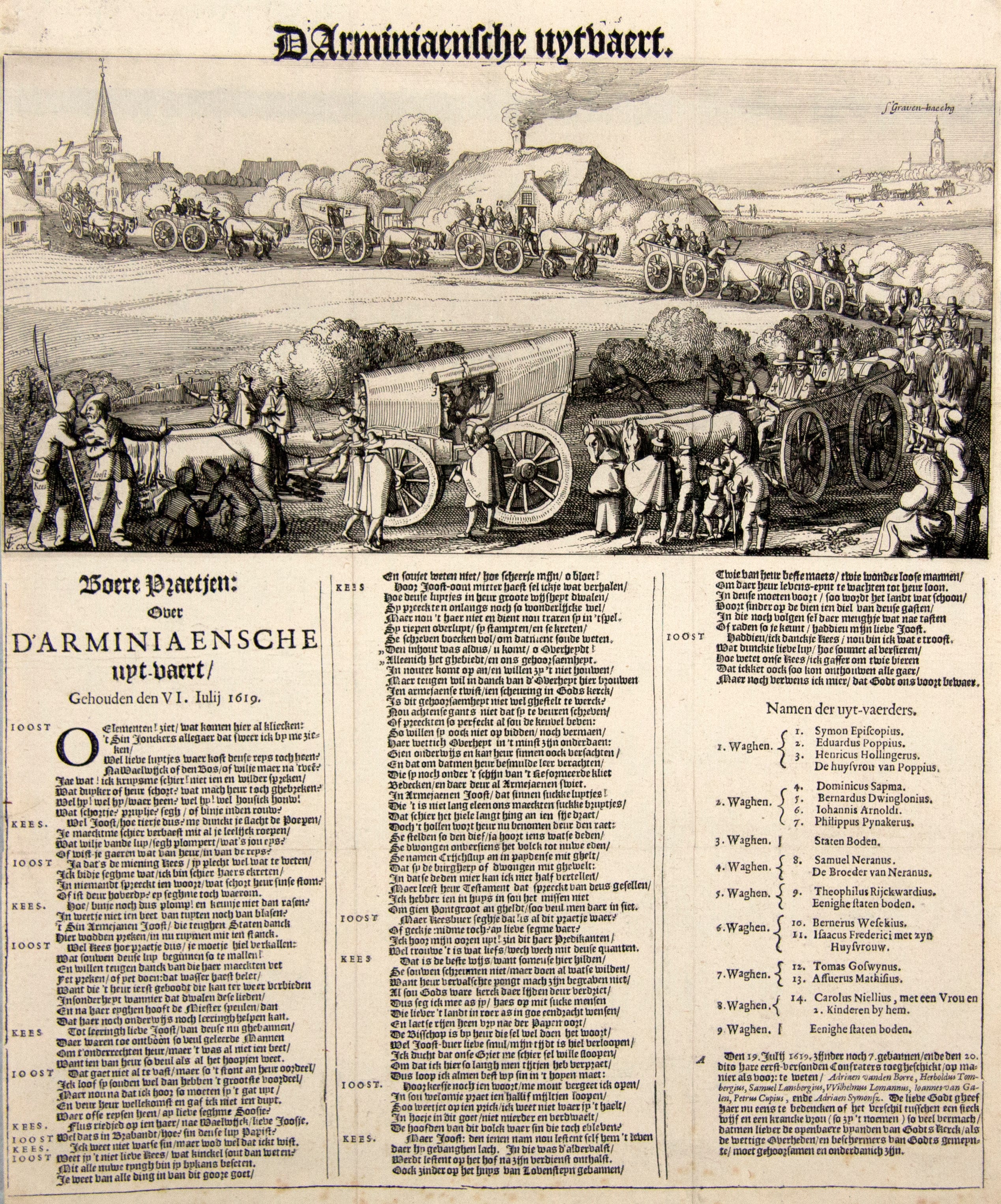
The image shows the “Remonstrant Exodus” (Called Arminians in the text in the image) after these Reformed Calvinists were told to leave the Seven Provinces after the Synod of Dordt and a few encouraging executions to hurry them on their way to nowhere. Ironically, I think most people today are more Arminian than not, but maybe that’s just me.
Anyway, at first glance, the conversion of the Elector in Prussia (Brandenburg) to Calvinism is not something that seems to suggest the Enlightenment is on the way. It is 1613 after all and the Thirty-Years War hasn’t even started yet. Rudolf II’s mad Magical Mannerist Regime running the Holy Roman Empire from Prague has only been out of the picture for one year. Even the Remonstrant (Calvinist) exodus would not happen for six years. But on Christmas Day 1613, the Elector converted to Calvinism and decreed Calvinism to be the official religion in his lands.
The odd bounce off of Calvinism in Prussia that encouraged the onset of the Enlightenment in Prussia was that while the Elector was Calvinist, most of his subjects were Lutheran – a situation that would last for two centuries, as we will see. Orthodox Lutherans and their enraged burger audiences would routinely do extreme things such as taking oaths to strangle any Calvinists they could find. Not a promising situation for the average Calvinist in Prussia. Fortunately or unfortunately, there were not many Calvinists in the Elector’s lands in 1613. What’s an Elector to do? Well, his brother suggested expanding his bodyguard for a start (see Clark down in the sources for this sort of local news). But some degree of enforcing religious toleration on local authorities and accepting religious refugees were some of the Prussian responses. Also, like the Papacy, the government of Prussia tried to prohibit antagonistic religious tracts.
In 1680, the Lutheran administrator of the Archbishop of Magdeburg, an important member of the Fruitbearing Society, died and Prussia acquired full administrative control of the defunct Archbishopric as a Duchy of its very own. The Prussian regime enforced the toleration of Calvinists there, even going so far as to allow them to own land and have legal standing as human persons in courts of law. It was a start and possibly the constructive aspects of the humane seeds encouraged by the Fruitbearing Society were also vaguely helpful in some unimaginable ways.
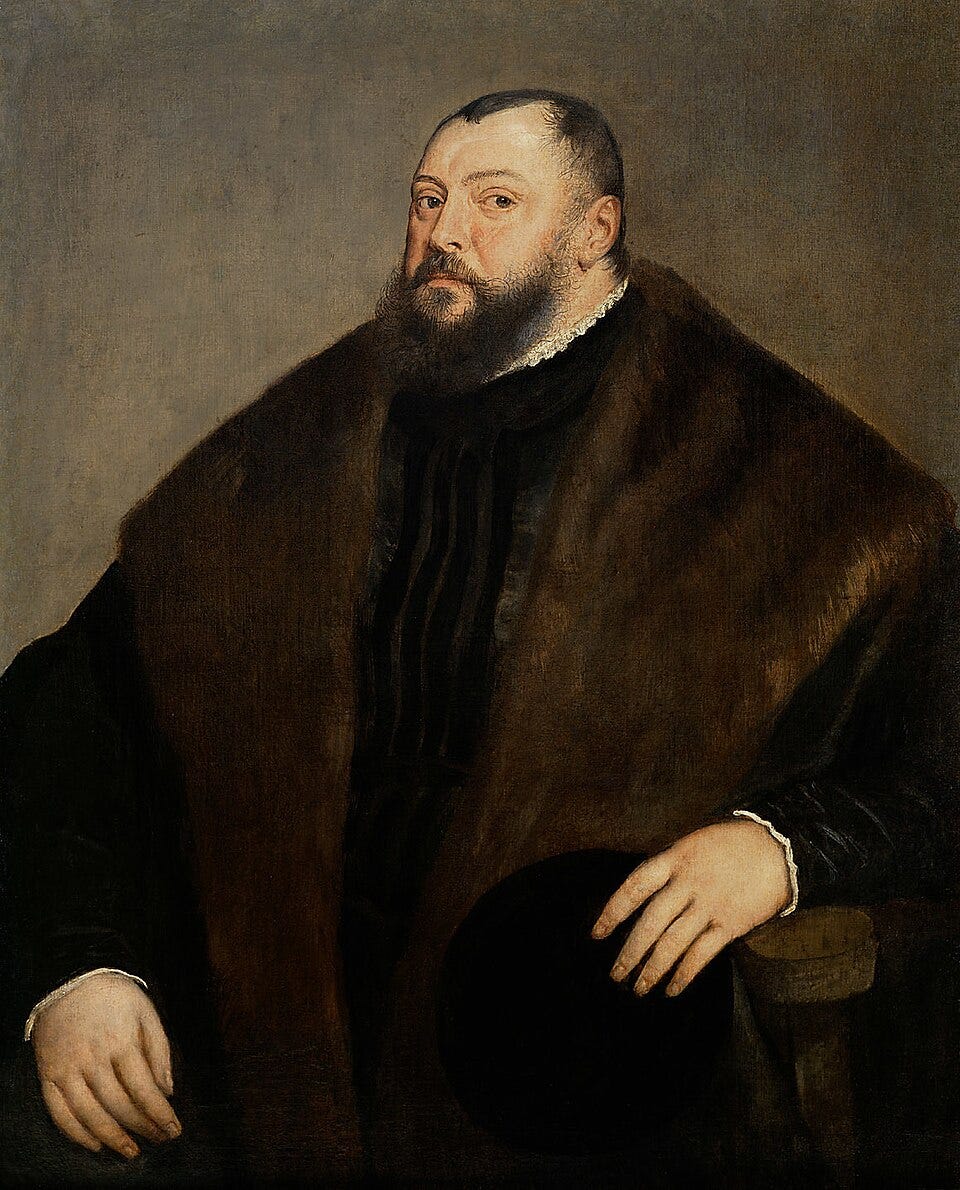
In even less imaginable ways, not far up the Saale in Saxony at Jena sat one of the original Lutheran Universities. John Frederick I, Elector of Saxony had decided in 1547 to educate some serious Lutherans there while he was a prisoner of war in the hands of Charles V, the Holy Roman Emperor who had captured John Frederick at the Battle of Mühlhausen when the Protestants suffered a major setback. In 1558, after some political compromises and after Titian had painted Charles and John separately, the University of Jena was instituted by John Frederick to do some education in a seriously Lutheran way.
John Frederick I, showing off his battle scar to Titian:
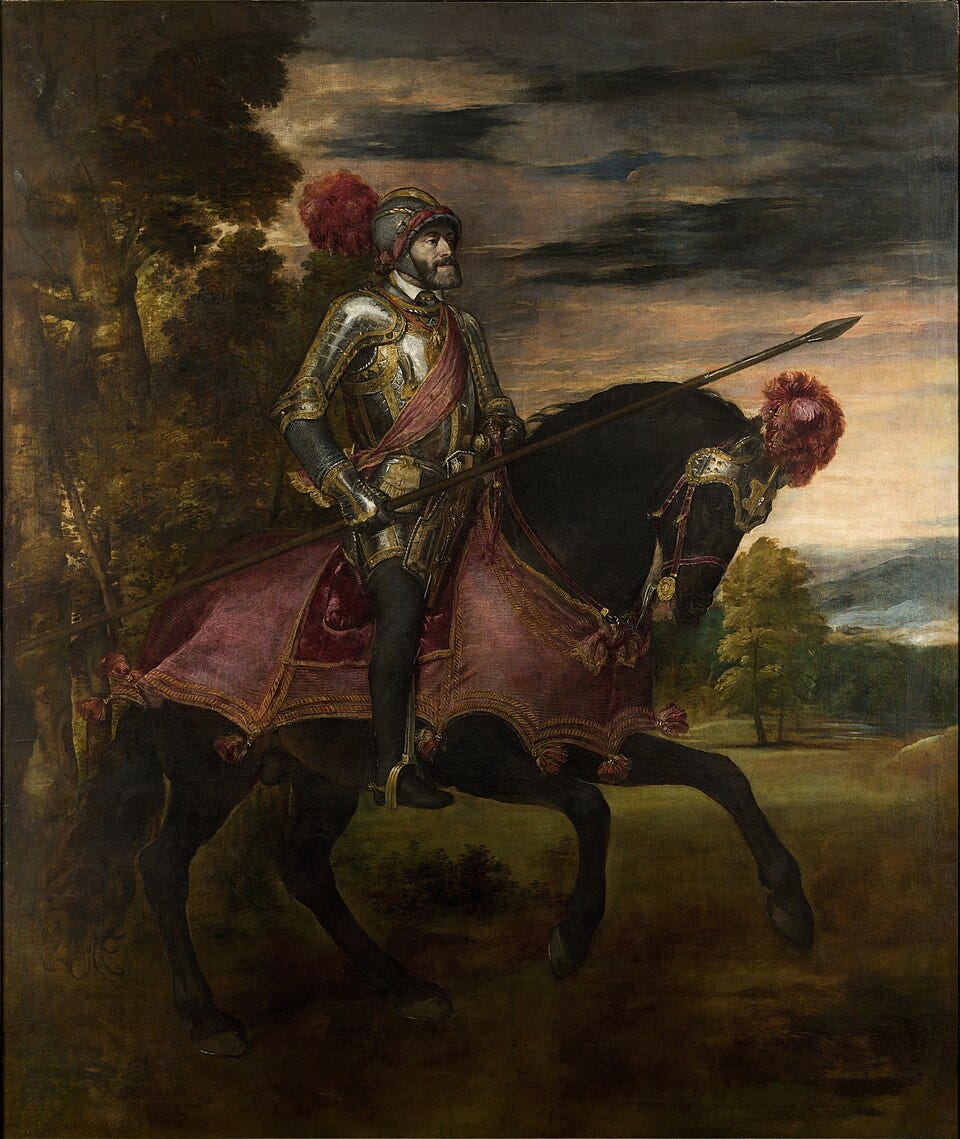
And there’s the victorious Emperor in one of the paintings Titian did of him.
Meanwhile, 136 years later, Frederick III, Elector of Brandenburg-Prussia chartered the University of Halle in the new Duchy he was re-engineering, downstream from Saxon Jena and upstream from his very own Magdeburg. Apparently, the Elector was hoping for some moderation in the relatively intense need of all Orthodoxies at that time (which in Prussia happened to be Lutheran) to warn everyone against a growing array of non-Orthodox opinions such as those held by Socinians or Deists or Spinozians. Socinians or even Arians (such as for example, in the case of Newton’s carefully concealed non-Trinitarian thoughts) had been a problem for a long time and Spinozist thoughts were so generally in the air as to make accusations of Spinozism utterly confusing for all concerned then and ever after – BUT , English Deism was extraordinarily new and extremely hazardous especially to medical students and others who might be a bit too Cartesian or Mechanistic already as we will see even in Wittenburg.
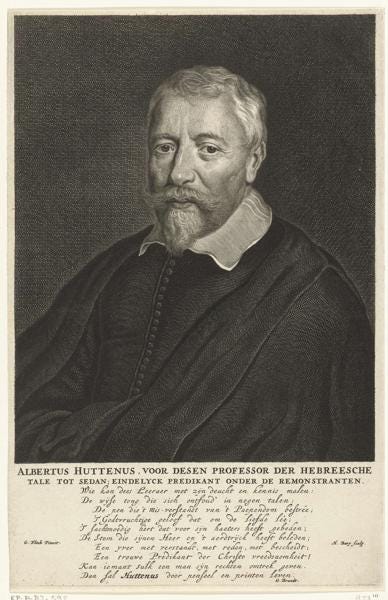
Another Arminian Remonstrant:
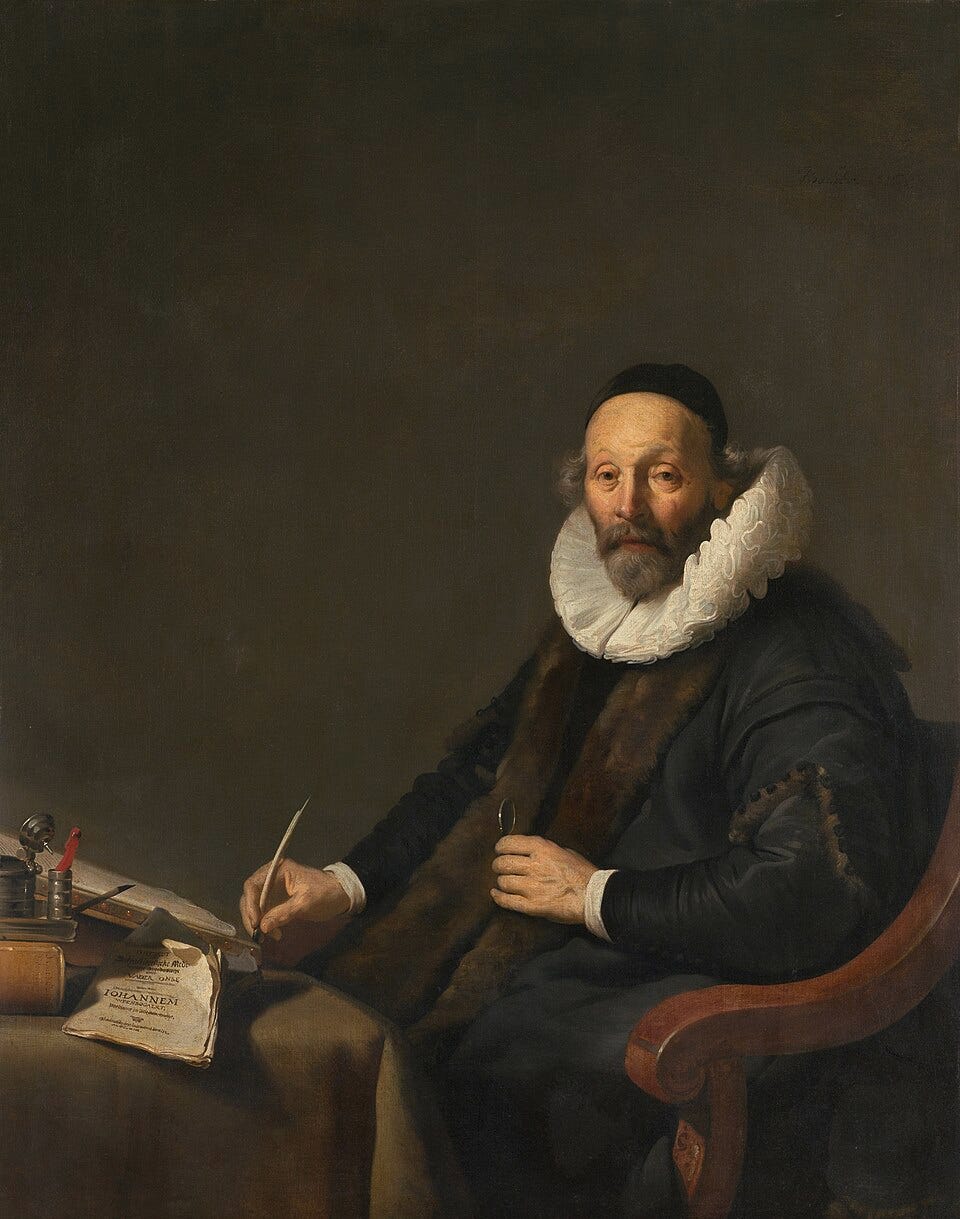
Martin Mulsow (see the sources below) points out that in many ways, the Orthodox need to be constantly on patrol at all levels and all places all the time was one of the fundamental drivers of the early Enlightenment since constant scrutiny and threatening responses by Orthodox authorities constantly brought the very things it wanted to suppress to everyone’s attention. Mulsow notes that in the very Orthodox University of Wittenburg, no one would have even heard of any Deist opinions if they had not been informed of the problem of Deism in the Orthodox gazette UnSchulige Nachrichen (Innocent Reports). And there even Socinianism was only known from Scripta Antisociniana.
But Pietism emerged as a different kind of problem for Lutheran Orthodoxy. At least when it started it had no particular theological identity. It represented itself as being as Orthodox as possible, but with an emphasis on actual behavior rather than on any scrutiny of internal doctrinal mental processes. It all began with pious hopes in 1675 in the short tract by Philip Jacob Spener called Pious Hopes. This released a mental firestorm of Orthodox panic because, despite being completely Orthodox, Pietism suggested some new norms for specifically religious behavior. For example, groups of ordinary congregants were supposed to form discussion groups called Colleges of Piety (Collegia Pietatis). These proved quite popular even within the walls of Lutheran universities devoted (as were all universities in the seventeenth century) to training the ordained pastorate. Eventually, the authorities reacted and the “conventicles” were banned and pietist students were excluded from ever being ordained at least in Saxony in 1689.
Meanwhile (and I do mean meanwhile), in neighboring Prussia, the Calvinist government began to look with interest at the Piestist movement as a way of reducing its Orthodox Lutheran religious problems a little. As pietists fled Saxony they found refuge in Prussia whereupon the Saxon universities followed up on their seemingly advantageous sweep of the doctrinal four-dimensional chess game. In 1692, the Theological faculty of the University of Wittenburg officially discovered 284 doctrinal errors in Spener’s pious hopes. Boom!
The Prussian town of Halle was not far from all these Saxon Antipietist goings on and it was in an area where the Prussian government was enforcing new forms of religious toleration where there had never been such things before. Academics of all kinds arrived in Halle to start the Prussian project of building a university that initially allowed most Protestant modes of pious activity. Though, as we will see, there were limits to how much piety could be tolerated even in that context especially when the activities to be tolerated came under the heading of following the rational implications of some sort of rationalist Leibnizian Reason. But in 1694 Protestant piety in a wide range of its forms reigned somewhat freely in Halle with barely a whisper of the full force of rationality that was about to be unleashed there.
Sources:
https://en.wikipedia.org/wiki/Remonstrants
Juan Garcia’s article:
https://en.wikipedia.org/wiki/Molinism
Mulsow, Martin, trans H. C. Erik Midelfort (!yes!) The Hidden Origins of the German Enlightenment, Cambridge U, 2023
Beyond Dordt and De Auxiliis The Dynamics of Protestant and Catholic Soteriology in the Sixteenth and Seventeenth Centuries Edited by Jordan J. Ballor, Matthew T. Gaetano, and David S. Sytsma, Brill, 2019
Clark, Christopher Iron Kingdom, Harvard U, 2006
And the post that sort of leads up to this one:
Paths of Enlightenment

I admit it seems to be somewhat true; the more we look for the Enlightenment, the more we find it everywhere. But don’t despair; we’ve covered a lot since St. Thomas Aquinas and have now arrived at 1600 or so on our way to the Enlightenment and beyond.
And topics:
Guide to Topics in Some Order

I was wondering how to set the background for what I thought I was trying to say about Schelling’s Ages of the World, a series of strange texts amounting to several different versions of thousands of pages of attempts to work out the stages of how the mind and the natural world emerged from a slew of ever-changing imaginary abyssal environments that he …